


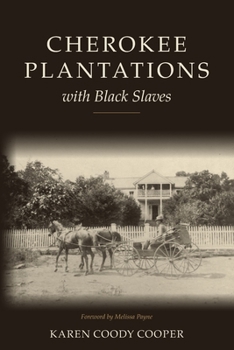
Cherokee Plantations

Before the Trail of Tears, and for decades after it, some of the wealthiest families in the Cherokee Nation built their fortunes on the labor of enslaved Black people. Cherokee Plantations with Black Slaves tells that story plainly, through the lives of the people who lived it.
Cherokee author and historian Karen Coody Cooper traces slaveholding across the Five Tribes: the Cherokee, Chickasaw, Choctaw, Muscogee (Creek), and Seminole Nations. Beginning in the old eastern homelands of Georgia, Tennessee, Alabama, and North Carolina, she follows plantation families through the Arkansas settlements of the Old Settlers, the forced removals of the 1830s, the rebuilding of plantations in Indian Territory, the upheaval of the Civil War, and the long struggle of the Freedmen for their rightful place in the Nations after emancipation.
Readers meet the planters and the people they held in bondage. James Vann built one of the great plantations of the old Nation, and Joseph Vann carried his enslaved workers west to rebuild a brick mansion at Webbers Falls. Choctaw leader Robert M. Jones held more than 227 enslaved people across his plantations. Shoe Boots, a Cherokee warrior, fathered children with Doll, a woman he enslaved, and his sisters went to court to try to free her and their half-siblings. Among the Seminole, leaders treated Black allies as equals, and Coacoochee led both Black and Seminole followers to Mexico. Drawing on Dawes Roll testimony, missionary journals, census and court records, newspapers, and the WPA oral histories of formerly enslaved people, Cooper restores names, families, and voices that history has too often erased.
This book does not soften hard truths. It documents sales and loans of human beings, escapes and recaptures, families divided by inheritance and debt, and the violence that held the system together. As Cooper writes, slave truths should appear in every Cherokee history book, and history should never be denied, dismissed, or forgotten.
It also records resilience. Formerly enslaved people and their children claimed allotments, built homes and communities, and served their Nations. Joseph "Stick" Ross, born into slavery in the household of Principal Chief John Ross, became a Freedman, a member of the Cherokee National Council, and a Tahlequah civic leader whose name lives on in Stick Ross Mountain and Tahlequah's Ross Cemetery. Stories like his show how the descendants of the enslaved helped shape the Nations themselves, and how many still live there today.
Arranged by Nation and era, each chapter offers short, readable portraits of families and plantations, making the book both a narrative history and a practical reference for genealogists, students, teachers, and descendants searching for their own ancestors. An extensive list of resources points readers toward further research.
With a foreword by Melissa Payne, Cherokee Nation Community Liaison, Cherokee Plantations with Black Slaves is an honest reckoning with a painful chapter of tribal history. For descendants of the enslaved and of slaveholders alike, it is an invitation to remember, to understand, and to heal.
Karen Coody Cooper is a citizen of the Cherokee Nation and a retired museum professional from the Smithsonian's National Museum of the American Indian and the Cherokee Heritage Center. She is the author of Spirited Encounters, Cherokee Women in Charge, and Oklahoma Cherokee Baskets, and co-author of Oklahoma Black Cherokees.
Customer Reviews
ThriftBooks ® and the ThriftBooks ® logo are registered trademarks of Thrift Books Global, LLC
