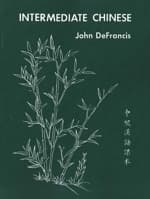
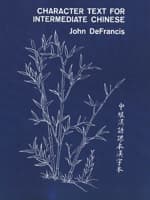
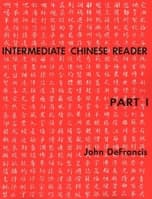
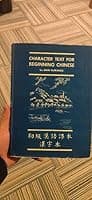
A Chinese-Character Transliteration of "Beginning Chinese"
By Thriftbooks.com User, May 19, 2004
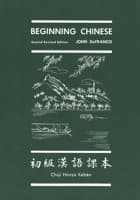
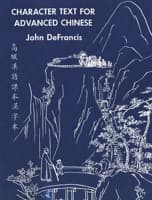
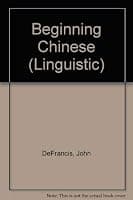
"Character Text for Beginning Chinese" is simply "Beginning Chinese" written all in "Han zi," or Chinese characters, rather than in pinyin. ("Beginning Chinese" being all in pinyin.)The above 2 books are the beginning (Mandarin) books in Yale's "DeFrancis Series," all written by John DeFrancis. But it's a bit more complicated than that, because in addition to the above 2 texts, there is a third beginning text, in 2 parts: "Beginning Chinese Reader, Part 1" and "Part 2." The "Reader"s aren't transliterations of the texts -- rather, they introduce Chinese characters in a different manner (easiest-to-write characters first, not most commonly spoken words first).If you're thinking of starting to learn Chinese, or you're already learning Chinese and looking for another text because the one you're using doesn't have enough info and/or practice, I would definitely recommend all these books, if you can get ahold of them, as well as the audiotapes (EXTREMELY useful), which are available through Far East Publications, part of the Yale bookstores, I think. The DeFrancis Series comes as close to being a self-contained, self-explanatory method for learning Chinese as is possible. I am studying Chinese at home now and I find using these texts and tapes is much less frustrating than what I went through during community college Chinese 1 and 2, in which we used the "Integrated Chinese" texts and tapes (as well as live teachers, of course). (I got an "A" for those 2 semesters so I'm not saying this out of thirst for vengeance!) Please see my review of "Beginning Chinese" for more info on why the DeFrancis Series is, in my opinion, so good.In regards to this particular book, you could just use the pinyin "Beginning Chinese" and then, after acquiring a basic knowledge of the spoken language, go directly to the Readers for a hopefully less frustrating introduction to Chinese characters, and skip buying this book altogether. But most people reading this review, I'll bet, have already studied some Chinese, both spoken/pinyin and written/character, and struggled through learning to write "wo," "nin," etc., cold. (I still flinch at these memories.) In that case, get this book, too, and follow along with it. No, don't consider just getting this book without the pinyin "Beginning Chinese," since one of the most valuable aspects to the DeFrancis series is the English translations of all the text, drills, etc. which are included in the pinyin text but not in the character text. (Otherwise, you won't know for sure if Lin Taitai is saying she lives on a big hill or she is a big hill. And don't tell me you never misread like that.)