


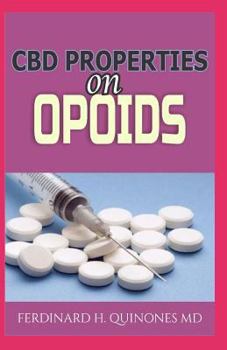
CBD Properties on Opoids: Everthing You Need to Know about Properties of CBD on Opoids
No Customer Reviews

Among the compounds found to modulate the ECBS, Δ9-tetrahydrocannabinol (THC) has been widely studied since its discovery in the 1960s as the main component of cannabis extract. Its psychosis and anxiety-inducing addictive properties are well known.8,9 In contrast, cannabidiol (CBD), the second most abundant component of cannabis - less studied than THC - has been shown to have anxiolytic, anti psychotic, antidepressant, and neuroprotective properties.10-13 CBD acts on the ECBS as a weak inverse agonist on CB1 receptors, stimulates the TRVP1, and alters the hydrolysis of AEA by inhibiting fatty acid amine hydrolase.14-16 CBD has been shown to be an agonist of 5-HT1a serotoninergic receptors and to regulate stress response and compulsive behaviors.17 Moreover, CBD modulates allosterically μ and δ opioid receptors. The direct impact of CBD on glutamatergic neurotransmission is not known, but its protective effects on glutamate toxicity have been studied.18,19 Altogether, CBD has been associated with many neural circuits involved in the acquisition of addiction and subsequent drug-seeking behaviors, making it an interesting pharmacological candidate to treat substance-use disorders.In past years, several researchers have studied the effects of CBD on physical and mental health, and a growing number have focused on the effects of CBD on addiction. The main objective of this review is to systematically examine the existing preclinical and clinical evidence on the effects of CBD on addictive behaviors.You may have heard about the dramatic rise in the misuse of opioid prescription pain relievers and opioid overdose deaths. Many people misusing prescription opioids get addicted to these drugs, and the consequences are sometimes fatal.Opioids can slow down a person's breathing; an overdose on prescription opioids can completely stop a person's breathing. About 20,000 people die from this kind of prescription drug overdose every year in this country, and about 75 of them are teens.Opioids are commonly prescribed because they are effective in relieving many types of pain. These medications are classified as narcotics and can be dangerous when abused. When used properly, opioids such as morphine have long been known to help the severe pain that follows surgery and to alleviate the suffering of people with advanced cancer. Recently, morphine and similar drugs have been used to treat chronic pain not caused by cancer. For many people, they have been remarkably helpful; for others, it either hasn't worked or has created problems over time.
Format:Paperback
Language:English
ISBN:1796418595
ISBN13:9781796418590
Release Date:February 2019
Publisher:Independently Published
Length:76 Pages
Weight:0.22 lbs.
Dimensions:0.2" x 5.5" x 8.5"
Customer Reviews
0 rating
Copyright © 2026 Thriftbooks.com Terms of Use
| Privacy Policy | Do Not
Sell/Share My Personal Information | Cookie Policy | Cookie Preferences | Accessibility Statement
ThriftBooks® and the ThriftBooks® logo are registered trademarks of Thrift Books Global, LLC
ThriftBooks® and the ThriftBooks® logo are registered trademarks of Thrift Books Global, LLC
