


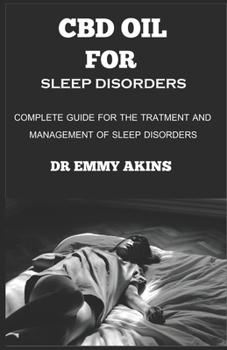
CBD Oil for Sleep Disorders: Complete Guide for the Treatment and Management of Sleep Disorders
No Customer Reviews

The public health burden of chronic sleep loss and sleep disorders is immense. Although clinical activities and scientific opportunities in the field are expanding, awareness among the general public and health care professionals is low, given the burden. The available workforce of health care providers is not sufficient to diagnose and treat individuals with sleep disorders. Therefore, the current situation necessitates a larger and more interdisciplinary workforce to meet health care demands as well as advance the field's knowledge base. Further, there is a need to develop and reorganize public health and academic sleep programs tofacilitate and improve the efficiency and effectiveness in public awareness, training, research, diagnosis, and treatment of sleep loss and sleep disordersInsomnia, a consistent difficulty in falling or staying asleep, is the most common of the sleep disorders. Individuals with insomnia often experience long delays between the times that they go to bed and actually fall asleep. In addition, these individuals may wake up several times during the night only to find that they have difficulty getting back to sleep.All Sleep Disorders involve daytime stress and trouble with work, school or daily activities because of sleep problems during the night. People with a sleep disorder often have depression, anxiety, trouble thinking, remembering or learning information that need to be treated along with the particular sleep problem.Ongoing sleep issues like insomnia (trouble falling asleep) or excessive (too much) sleeping can lead to other mental health problems, so getting help is important if the patients suffer from these conditions.It is not uncommon for people suffering from insomnia to experience increased levels of anxiety about their inability to fall asleep. This becomes a self-perpetuating cycle because increased anxiety leads to increased arousal, and higher levels of arousal make the prospect of falling asleep even more unlikely. Chronic insomnia is almost always associated with feeling overtired and may be associated with symptoms of depression.There may be many factors that contribute to insomnia, including age, drug use, exercise, mental status, and bedtime routines. Not surprisingly, insomnia treatment may take one of several different approaches. People who suffer from insomnia might limit their use of stimulant drugs (such as caffeine) or increase their amount of physical exercise during the day. Some people might turn to over-the-counter (OTC) or prescribed sleep medications to help them sleep, but this should be done sparingly because many sleep medications result in dependence and alter the nature of the sleep cycle, and they can increase insomnia over time. Those who continue to have insomnia, particularly if it affects their quality of life, should seek professional treatment.
Format:Paperback
Language:English
ISBN:B08CWD67PK
ISBN13:9798665870892
Release Date:July 2020
Publisher:Independently Published
Length:38 Pages
Weight:0.13 lbs.
Dimensions:0.1" x 5.5" x 8.5"
Customer Reviews
0 rating
Copyright © 2026 Thriftbooks.com Terms of Use
| Privacy Policy | Do Not
Sell/Share My Personal Information | Cookie Policy | Cookie Preferences | Accessibility Statement
ThriftBooks® and the ThriftBooks® logo are registered trademarks of Thrift Books Global, LLC
ThriftBooks® and the ThriftBooks® logo are registered trademarks of Thrift Books Global, LLC
