


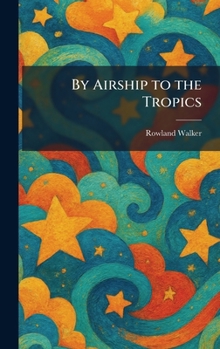
By Airship to the Tropics

Select Format
Select Condition 
Book Overview
"By Airship to the Tropics" is a high-stakes adventure novel that captures the early twentieth-century fascination with aviation and global exploration. Written by Rowland Walker, a prolific author of spirited narratives for young readers, the story follows a daring expedition as it traverses the skies in a majestic airship. Setting off for the lush and perilous landscapes of the tropics, the characters face a series of breathtaking challenges, from navigating treacherous weather patterns to encountering unknown territories.
Walker's narrative blends technical wonder with the classic elements of a survival odyssey, emphasizing the bravery and ingenuity required to master the heavens. The book serves as a vibrant example of the "air adventure" genre, which captivated audiences during the golden age of flight. Readers are treated to a story of camaraderie and discovery, where the airship itself represents the pinnacle of human achievement. This work remains a significant piece of historical fiction that reflects the era's optimistic spirit of discovery and the burgeoning possibilities of aerial travel.
This work has been selected by scholars as being culturally important, and is part of the knowledge base of civilization as we know it. This work was reproduced from the original artifact, and remains as true to the original work as possible. Therefore, you may see the original copyright references, library stamps (as most of these works have been housed in our most important libraries around the world), and other notations in the work.
This work is in the public domain in the United States of America, and possibly other nations. Within the United States, you may freely copy and distribute this work, as no entity (individual or corporate) has a copyright on the body of the work.
As a reproduction of a historical artifact, this work may contain missing or blurred pages, poor pictures, errant marks, etc. Scholars believe, and we concur, that this work is important enough to be preserved, reproduced, and made generally available to the public. We appreciate your support of the preservation process, and thank you for being an important part of keeping this knowledge alive and relevant.
Customer Reviews
ThriftBooks ® and the ThriftBooks ® logo are registered trademarks of Thrift Books Global, LLC
