


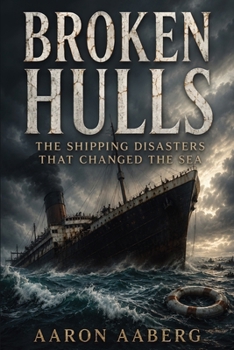
Broken Hulls: The Shipping Disasters That Changed the Sea

For centuries, the sea carried passengers, soldiers, workers, refugees, fuel and the raw materials of civilisation. It also exposed every weakness hidden within the ships entrusted with their lives. A missing lifeboat, an overloaded deck, an open bow door, a misunderstood radar contact or a warning ignored ashore could transform an ordinary voyage into catastrophe.
Broken Hulls: The Shipping Disasters That Changed the Sea follows the defining maritime tragedies that reshaped modern shipping, from the overloaded vessels of the nineteenth century and the loss of Titanic to the fires aboard Morro Castle and Scandinavian Star, the capsizing of Herald of Free Enterprise and Estonia, the environmental devastation of Torrey Canyon and Exxon Valdez, and the modern failures surrounding Sewol, Costa Concordia and El Faro. It also examines disasters that remain less widely remembered despite immense loss of life, including Eastland, Lancastria, Wilhelm Gustloff, Do a Paz and Le Joola.
Behind every wreck lies more than a storm, collision or mechanical failure. These disasters reveal overcrowding, inadequate stability, poor maintenance, divided authority, commercial pressure, obsolete regulations and safety systems that existed principally on paper. They also reveal extraordinary courage: crews who remained at their stations, passengers who helped strangers escape, fishermen who reached overturned ferries before official rescuers, and investigators and bereaved families who refused to let preventable deaths be dismissed as fate.
Spanning more than a century of maritime history, Broken Hulls is a compelling account of the ships that failed, the people caught aboard them and the rules written in their wake. It is a history of tragedy, responsibility and the hard-earned reforms behind every voyage that reaches port safely.
Customer Reviews
ThriftBooks ® and the ThriftBooks ® logo are registered trademarks of Thrift Books Global, LLC
