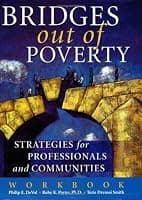
Bridges out of poverty is one of the most useful books
By Thriftbooks.com User, March 9, 2010
It contains simple concepts and is very practical to implement. It's a great tool that can be adapted to individual, family, community and policymaker levels.
1
★★★★★
must read for teachers
By Thriftbooks.com User, August 15, 2008
If only I had read this book during the 18 years I taught in a poor rural school. I'm now retired, and because of that teaching experience and the needs of which it made me aware I'm volunteering in a community program geared to help people move out of poverty. I had good intentions, but if I had been aware of many of the specifics mentioned in the book I could have been more effective during those teaching years.
1
★★★★★
Bridges Out of Poverty
By Thriftbooks.com User, July 3, 2008
Very insightful reading. Would be a great read for anyone working in social services. It is interesting to realize that there is some level of poverty mentality within most people. Truely the best book I have read on the subject of poverty.
1
★★★★★
Bridges Out of Poverty
By Thriftbooks.com User, August 26, 2007
As an educator I strongly urge anyone working with "helping" services, including education, to read this book. It is an easy read that can provide invaluable insights. This book sheds much light on the inhibiting assumptions and obstacles that seperate the varying socioeconomic classes. I have begun to change my approach to educating as a result of Dr. Payne's work. Do yourself and those you are trying to help a favor...read this book!
1
★★★★★
A Powerful Mentoring Model
By Thriftbooks.com User, September 27, 2004
I was fortunate to attend a workshop one year ago which included this book and two of the three authors, DeVol and Dreussi-Smith. They highlighted the content of the book, to an audience of counselors, social workers, case managers, residential treatment staff for chemical dependency recovery, and prevention specialists. This book spotlights the culture of poverty, and the distinct differences in the way in which the poor, the middle class and the wealthy view the world from their unique vantage points. I was enlightened in learning to understand the frames of references of persons without savings, present time- orientation, and the differences in the way each class views, uses and perfects the resources of each cultural status. The concept of "bridging" and mentoring is strongly presented, and many individual, organizational and systemic suggestions are made by the authors. This is an excellent resource for people who wish to or need to broaden their awareness of the "hidden rules" of each economic class, and how to provide more effective assistance to those persons wishing to improve their economic and educational status, without judgment. I highly recommend this book.