


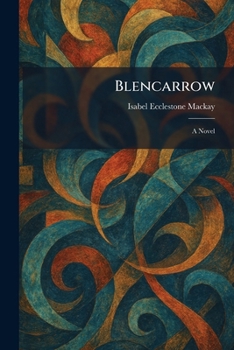
Blencarrow

Select Format
Select Condition 
Book Overview
"Blencarrow" is a compelling 20th-century novel that explores the intricate social fabric and hidden complexities of a small town. The narrative follows the inhabitants of the titular community as they navigate the shifting tides of personal ambition, social expectations, and long-held secrets. The story provides a vivid portrait of life in the early 1900s, blending elements of domestic drama with deep psychological insight into its varied cast of characters.
As the plot unfolds, the novel examines universal themes of maturity, the burden of the past, and the search for individual identity within the confines of a close-knit environment. Written by Isabel Ecclestone Mackay, a significant voice in Canadian literature, the work is noted for its lyrical prose and keen observation of human nature. "Blencarrow" offers readers a nuanced window into the cultural and social landscape of North America during a transformative era, elevating the mundane details of daily existence into a rich tapestry of literary merit. This work remains an important example of regional fiction, capturing the essence of a town caught between established traditions and the inevitable march of modernity.
This work has been selected by scholars as being culturally important, and is part of the knowledge base of civilization as we know it. This work was reproduced from the original artifact, and remains as true to the original work as possible. Therefore, you may see the original copyright references, library stamps (as most of these works have been housed in our most important libraries around the world), and other notations in the work.
This work is in the public domain in the United States of America, and possibly other nations. Within the United States, you may freely copy and distribute this work, as no entity (individual or corporate) has a copyright on the body of the work.
As a reproduction of a historical artifact, this work may contain missing or blurred pages, poor pictures, errant marks, etc. Scholars believe, and we concur, that this work is important enough to be preserved, reproduced, and made generally available to the public. We appreciate your support of the preservation process, and thank you for being an important part of keeping this knowledge alive and relevant.
Customer Reviews
ThriftBooks ® and the ThriftBooks ® logo are registered trademarks of Thrift Books Global, LLC
