


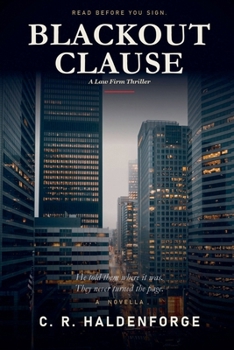
Blackout Clause: A Law Firm Thriller

Read before you sign.
Daniel Ito is the associate nobody notices. On the forty-first floor of a Seattle tower, at Hallworth Drummond LLP, he handles the boring parts: the renewals, the conflict checks, the fine print that every partner signs and nobody reads. He is quiet, careful and very good. The firm trusts him with everything. It never asks him what he thinks.
Then, one night in September, a routine search of the conflicts database shows him something he was never meant to understand. Behind an ethical wall, the firm's star partner is advising a private-equity buyer on how to take over the firm's own biggest client: Kestrel Bay Logistics, a family-founded company whose chair has trusted the firm for thirty years. The code name is Project Anchorage. Nobody has told the client.
Daniel does what a good lawyer is supposed to do. He writes a memo. The general counsel's reply is one line long, and it ends: "Please do not put concerns of this kind in writing again."
So Daniel does something else.
Three weeks later he drafts the client's contract renewal. The cover memo is honest. The terms are plain. And on page eleven, in Section 14, in language lifted from the client's own published guidelines, sits a representation that costs the firm $4.2 million the moment it is false.
He tells the managing partner it is there. He asks him to read it. The managing partner smiles, says "You always handle the boring parts," and signs in an elevator in four seconds.
A tense, intelligent, quietly devastating novella about conflicts of interest, corporate loyalty and the difference between a trap and a warning, and about what happens when the person everyone trusts to read the contract is the only one who does.
For readers of The Firm, Michael Clayton and Billions, and for anyone who has ever scrolled to the bottom of a page and clicked "I agree."
Customer Reviews
ThriftBooks ® and the ThriftBooks ® logo are registered trademarks of Thrift Books Global, LLC
