


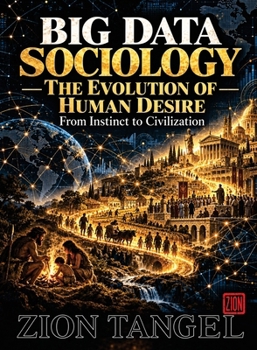
Big Data Sociology the Evolution of Human Desire: From Instinct to Civilization

What connects the birth of a child, the pursuit of a promotion, the formation of a team, and the rise of an enduring institution?
In Big Data Sociology: The Evolution of Human Desire, Zion Tangel follows a single question from everyday life into the history of civilization: how do human needs change the relationships through which people obtain resources, organize work, exercise authority, and sustain social order?
The book examines the Five Desires, Three States model through population data, workplace surveys, household financial records, and documented historical cases. Its five levels trace physiological desire, family desire, social desire, dominance desire, and institutional desire. Its three states distinguish satisfaction, compensation, and escalation or overreach. Together, these distinctions offer a way to examine what people pursue, how they respond to their circumstances, and where their actions lead.
The investigation begins with familiar experiences. Marriage creates a household. A child brings continuing responsibilities. Financial pressure can send a parent toward additional work, education, or a leadership opportunity. Yet people facing similar circumstances make different choices. Some accept an attained position; others seek support, wider authority, or a new direction. The book asks what the available evidence reveals about these differences.
From there, the inquiry moves beyond individual ambition. Greater undertakings require capacities that one person cannot supply alone. Teams connect information, technical skills, resources, and implementation. Leadership coordinates those contributions. Authority can extend beyond an original group, while institutions preserve powers and obligations across successive occupants.
A central distinction runs through the book: the historical formation of an institution differs from an individual's later entry into it. An elected leader, appointed official, or successor can receive capacities that earlier generations built. Understanding that difference helps explain why a personal career may appear to skip stages that remain visible in the history of organized society.
The chapters connect statistical comparisons with concrete stories from different societies and periods. Each kind of evidence serves a defined purpose: population data reveal distributions and associations; documentary records show relationships, decisions, and changes in authority. Historical back mapping connects those observations to the model's definitions.
Written for readers interested in sociology, social philosophy, leadership, and human motivation, this book brings family life, organizational cooperation, political authority, and institutional continuity into one sustained investigation. Six black-and-white illustrations and chapter tables help readers follow the framework and examine its evidence.
From instinct to civilization, human desire is expressed through relationships that grow beyond the individual. This book invites readers to consider how those relationships develop, what they make possible, and why satisfaction is only one part of the story.
Let big data reveal the truth behind complex social phenomena.
Customer Reviews
ThriftBooks ® and the ThriftBooks ® logo are registered trademarks of Thrift Books Global, LLC
