


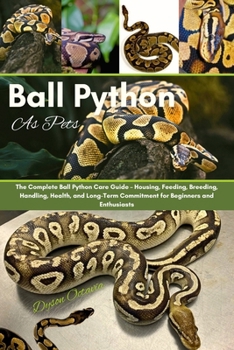
Ball Python as Pets: The Complete Ball Python Care Guide - Housing, Feeding, Breeding, Handling, Health, and Long-Term Commitment for Beginners and En
No Customer Reviews

Introduction to the Ball Python Species Overview and Natural History The Ball Python (Python regius), also known as the Royal Python, is one of the smallest species in the python family, native to the savannas and grasslands of West and Central Africa. Its common name "Ball Python" comes from its distinctive defensive behavior: when threatened, it curls tightly into a ball with its head tucked in the center, relying on its muscular coils to shield itself. This strategy, rather than aggression, highlights the species' naturally docile and non-confrontational temperament. Ball Pythons are non-venomous constrictors. They subdue their prey by striking, coiling around it, and using muscular strength to suffocate it before swallowing. Their natural diet consists mainly of small mammals such as rats, mice, and shrews, though in the wild they may occasionally eat birds. They are mostly nocturnal, spending daylight hours hidden in burrows, under logs, or in dense vegetation to avoid predators and harsh heat, becoming active at dusk to hunt. In their native habitats, they play an important ecological role by controlling rodent populations, which helps maintain balance within the ecosystem. This makes them not only fascinating creatures but also beneficial to human agriculture, as they naturally keep rodent pests in check. Why They Are Popular Among Reptile Enthusiasts Ball Pythons are widely regarded as one of the most popular pet snakes in the world, and their popularity stems from several key factors: 1. Manageable Size: Unlike larger python species that can exceed 10-20 feet in length, Ball Pythons are modest in size. Adults average between 3 to 5 feet, with females being larger than males. This makes them much easier to house, handle, and care for in a domestic setting. 2. Gentle Temperament: Their calm and shy nature makes them suitable even for beginners. Ball Pythons rarely display aggression, and their primary defense mechanism-curling into a ball-is a clear sign of stress rather than hostility. This non-threatening behavior gives keepers confidence when learning how to handle snakes. 3. Longevity: With proper care, Ball Pythons can live for 20-30 years in captivity, offering long-term companionship and making them a rewarding commitment for reptile keepers. 4. Wide Variety of Morphs: Selective breeding has produced hundreds of morphs-genetic variations that affect the snake's coloration and pattern. From albino and piebald to more complex morphs with intricate patterns, this variety makes them highly appealing to hobbyists interested in collecting or breeding unique snakes. 5. Low Maintenance: Compared to other exotic pets, Ball Pythons require relatively straightforward care-secure enclosures, correct heating and humidity, and appropriate feeding schedules. Once their needs are met, they are hardy and adaptable. Because of these traits, Ball Pythons are often recommended as an introductory species for those new to reptile keeping, while still offering enough variety and interest to keep advanced hobbyists engaged.
Format:Paperback
Language:English
ISBN:B0FTF6NW4V
ISBN13:9798267554503
Release Date:September 2025
Publisher:Independently Published
Length:140 Pages
Weight:0.43 lbs.
Dimensions:0.3" x 6.0" x 9.0"
Customer Reviews
0 rating
Copyright © 2026 Thriftbooks.com
Terms of Use | Privacy Policy | Do Not Sell/Share My Personal Information | Cookie Policy | Cookie Preferences | Accessibility Statement
ThriftBooks ® and the ThriftBooks ® logo are registered trademarks of Thrift Books Global, LLC
ThriftBooks ® and the ThriftBooks ® logo are registered trademarks of Thrift Books Global, LLC
