


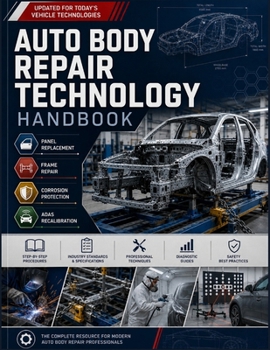
Auto Body Repair Technology Handbook: Panel Replacement, Frame Repair, Corrosion Protection, and ADAS Recalibration Procedures.

A modern collision repair is no longer a question of straightening metal and matching paint. Today's vehicles arrive in the shop as networks of dozens of onboard computers, ultra-high-strength steel and aluminum structures, and sensor-dependent safety systems - and a repair that looks flawless can still be dangerously incomplete.
Many people learning this trade, and many technicians already working in it, were trained one skill at a time - metalwork in one class, welding in another, refinishing somewhere else - with little connecting the pieces or explaining the reasoning behind each step. That gap has real consequences. Applying heat to a high-strength structural member the way older mild steel could once be heated can permanently strip away the very strength engineered to protect a driver in a future collision, without leaving a single visible sign. Returning a vehicle without recalibrating a camera or radar sensor displaced during the repair can leave an active safety system silently non-functional. A repair can look mechanically correct and still fail the people who depend on it.
What This Handbook Offers
This handbook gives students and working technicians one connected technical foundation for the complete modern collision repair process, organized so a chapter can be read on its own as a focused desk reference or worked through from start to finish to build a full, cumulative understanding - with the reasoning behind every procedure shown, not just the steps.
Inside, You Will Find How to:
Classify materials with confidence - learn to classify automotive steel and aluminum by grade and behavior, and choose the correct repair strategy (straighten, section, or replace) for each component.Follow fully solved calculations - work through numerical examples for stress, strain, heat input, weld quality, and sensor-calibration tolerances, with every variable and unit tracked.Master structural sequencing - follow structural measuring, frame and unibody straightening, panel replacement, and welding procedures in the order a real repair actually proceeds.Build refinishing skill - from primer selection and surface preparation through spray application, blending, and color matching.Understand vehicle electronics - develop a working grasp of vehicle electrical systems, communication networks, and restraint-system safety, including damage that isn't visible on inspection.Learn calibration decision-making - know when a repair requires driver-assistance sensor calibration, how each method works, and how to document the result defensibly.Prepare for certification examsKey Topics Covered
Shop safety and industry rolesAutomotive steel and aluminum classificationHand and power toolsMetal straightening, MIG welding, and resistance spot weldingStructural and panel replacement proceduresPlastic and composite repairVehicle measuring systemsFrame and unibody straighteningCorrosion protection and surface preparationRefinishing, color matching, and spectrophotometryDriver-assistance sensor calibrationVehicle electronics, communication networks, restraint-system safety, and hybrid/electric vehicle high-voltage precautionsWho This Book Is For
Students in career and technical education, community college, and vocational collision repair programs, and working technicians - new to the trade or meeting unfamiliar modern-vehicle technology - who want a single, connected reference rather than a stack of disconnected manuals.
Begin building a clearer, more connected understanding of modern collision repair with a handbook designed around the way the work actually happens - from damage analysis through the final safety check.
Related Subjects
TransportationCustomer Reviews
ThriftBooks ® and the ThriftBooks ® logo are registered trademarks of Thrift Books Global, LLC
