


Auschwitz


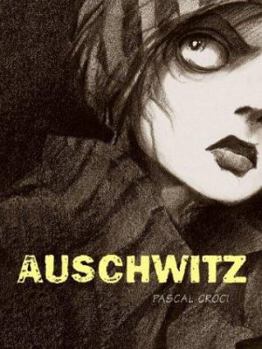
Using the fictional story of a couple named Kazik and Cessia who lose a daughter at the Auschwitz-Birkenau Concentration camp and barely survive themselves, Pascal Croci depicts the horror and brutality of the Holocaust in grim, searing, black-and-white illustrations.
Format:Hardcover
Language:English
ISBN:0810948311
ISBN13:9780810948310
Release Date:April 2004
Publisher:Harry N. Abrams
Length:88 Pages
Weight:1.52 lbs.
Dimensions:12.5" x 0.4" x 9.4"
Age Range:13 years and up
Grade Range:Grade 8 to Postsecondary
Customer Reviews
5 ratings
Fabulous
Published by Thriftbooks.com User , 18 years ago
I loved this graphic novel. The black and white pencil art lends a bleakness, yet also a richness to the subject matter. I think the center page/panel is one of the most intense images and it is simply some clouds and thought bubbles, but it really hits you in the gut with the horror of the occurrences in the concentration camps.
Beautifully Haunting
Published by Thriftbooks.com User , 18 years ago
it's a beautiful book,if you can call something like what happened at auschwitz anything but horrendous; sad and lingering. the graphics are drawn so startlingly they stay with you.
What a Book!
Published by Thriftbooks.com User , 19 years ago
I have read everything I can get my hands on about the Holocaust since I was 15 years old. I am now 65, so you can tell I have had a lot of reading. This book tells the story I was very familiar with, but in a unique way! The art work in the book was very good and illustrates the events factually. For a unique perspective on the Holocaust, I recommend this book highly.
Apocalypse Then
Published by Thriftbooks.com User , 20 years ago
Obviously the shadow of Art Spiegelman's acclaimed Maus books fall long over any graphic story relating the Holocaust. Fortunately Croci's oversized book takes a very different visual approach, using grim pencil illustrations toned with gray watercolor washes to create an oppressively bleak monochrome world. The story is about a couple who manage to survive internment at Auschwitz-Birkenau, but not without losing their daughter. Their straightforward tale takes the form of a lengthy flashback bookended by their plight somewhere in former Yugoslavia, circa 1993. (This tie to present-day ethnic cleansing, while admirable in spirit, feels a forced and awkward.) Faced with imminent discovery and execution by unnamed forces, the couple recounts to each other their experience at Auschwitz. Their memories share the nightmarish brutality of all Holocaust survivor stories, and Croci's expressionist-influenced and heavily researched artwork brings it all to awful life. From the gaunt forms of the inmates to the hooded dark eyes of the camp guards and officers, there is no humor, no respite, none of the ridiculous "Life is Beautiful" hope, just the haunted, bitter resignation of captured prey. At the back of the book, Croci discusses his obvious influences (Lanzmann's Shoah documentary, Spielberg's film Schindler's List, and Bernadac's book The Naked Mannequins) as well as how his own interviews with survivors shaped the work. The ultimate tone of the book can perhaps best be captured in his statement "Nazi violence is beyond forgiveness." There are a few missteps, such as the lifting of an incident from Schindler's List, and the rather strange misspelling of Mengele, but on the whole it does what all Holocaust literature ought to: horrify.
A dark look at an even darker time
Published by Thriftbooks.com User , 21 years ago
I've been looking for good graphic novels about the Holocaust ever since I read Maus and Maus II back in 6th grade. I'm a college sophomore now, and happened upon Croci's book in our university library. This book is very disturbing, and thus very powerful. Croci's people, Jews and Germans, are drawn in a wide-eyed, ghoulish manner. No one smiles. Still, there is beauty to be found in the figures and faces he creates. He cites inspiration from the film "Schindler's List," but it only seems to exist in the black and white of his work. The sense of hope in Spielberg's film, of one man's humanity, is no where to be found. I did not find this to be as engaging as Maus of "Schindler" because none of the characters are given a personality. Stepping back, it makes sense (even more so when you read Croci's extensive interview in the back). He has stripped every person down to the fragments that are left when your only thought is of survival. This does not make the story very engaging--rather you find yourself turning page after page to see what atrocity lies next. That said, I still reccommend this book. It's something you will want to discuss after you read it. It's art is as powerful as the photos we have of this terrible place. Of note is the gas chamber sequence, unveiled by a mist of poison when the Jew workers open the doors to burn the bodies. It's consistently dark, inhuman tone is perhaps a more accurate vision of the Holocaust than the humanity presented by Spielberg. It's not a read you'll soon forget. I would also reccommend this as a book for children 10 and up, because it is VERY disturbing at times and seems more written for adults. You know your child better than anyone else, so flip through and make your own judgment first. I for one will not get that gas chamber image out of my head for a long time.
Copyright © 2026 Thriftbooks.com
Terms of Use | Privacy Policy | Do Not Sell/Share My Personal Information | Cookie Policy | Cookie Preferences | Accessibility Statement
ThriftBooks ® and the ThriftBooks ® logo are registered trademarks of Thrift Books Global, LLC
ThriftBooks ® and the ThriftBooks ® logo are registered trademarks of Thrift Books Global, LLC
