
Rediscovering the Context of the Fur Trade in the Building of an American Empire
Published by Thriftbooks.com User , 20 years ago
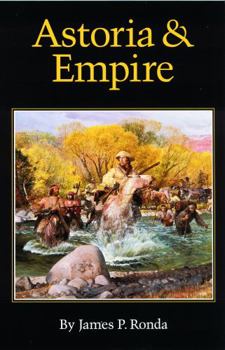
Frontier historians have long been appreciative of the path-breaking establishment of Astoria as a fur-trading post on the Columbia River in 1811 and its short history as a pawn in international rivalries. James P. Ronda, well respected for his work on the Lewis and Clark Expedition, presents in this book the first full-length study of Astoria to appear since Washington Irving's "Astoria" in 1836. The result is a fine work that is more significant than just a story of adventure in the Pacific Northwest or just one more account of a single aspect of the fur trade. It moves with a sweep and a dimension that places the little post on the banks of the Columbia River in the vortex of world events, a pawn in games of international rivalry and chance. Ronda describes carefully the efforts of John Jacob Astor, head of the Pacific Fur Company and several other business enterprises, to establish Astoria as the capital of his far western trading empire during the first decade of the nineteenth century. That effort moved from New York to Washington to St. Petersburg to Montreal to Canton as he manipulated international politics and appealed to personal desires. Astor, motivated by a quest for wealth but fortified by a sense of national prominence, appealed to the expansionist-minded politicians of the United States to gain support for Astoria's creation. He was finally successful and in 1811 the site was settled by representatives of the Pacific Fur Company traveling in two contingents, one overland and the other by sea. For the next three years Astor and his lieutenants battled bureaucracy in several nations, international ambitions on the part of several countries, rival fur trading companies, and the economics of the business to keep Astoria in operation. They failed, and it succumbed during the War of 1812 only to become one of the British North West Company's posts for the next twenty years. But "Astoria & Emoire" is more than a recitation of the life and death of the American settlement. Although it is little more than a footnote in most history texts, if Ronda had limited his book to the Astoria's history irrespective of other events that affected it I would have questioned the necessity of its publication. Instead, Ronda provides an excellent study in the history of international relations at several levels of governments and between private citizens. Astoria is, essentially, a case study in business and politics in an international setting. Ronda's work, moreover, is a social history. He uses some untapped historical materials to reconstruct life on the trips to and from Astoria as well as activities at the post. In so doing, he presents a very useful portrait of activities in an early fur trading establishment. He describes something of the interrelationships of cultures and allegiances between the Americans, the Indians, the French and British Canadians, the Russians, and the Hawaiians. This social portrait is especially welcome also as a gl
ThriftBooks sells millions of used books at the lowest everyday prices. We personally assess every book's quality and offer rare, out-of-print treasures. We deliver the joy of reading in recyclable packaging with free standard shipping on US orders over $20. ThriftBooks.com. Read more. Spend less.

