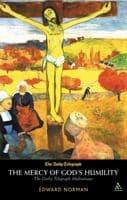
A searing new book about the state of the Anglican Church from its most gifted right-wing enfant terrible. Edward Norman is the scourge of the liberal establishment, which still dominates the Church of England. He has one of the sharpest minds of all the commentators on the current religious scene and he writes passionately about areas in which others fear to tread. Unfashionably, in Anglican Difficulties, he writes extensively about authority, the deposit of faith, and tradition. In this book he expands further on the lecture he gave at the Lambeth Conference in 1998 when he addressed bishops on the nature of authority in the Anglican Communion. God, he argues, provided a structured order in human relationships in order to coerce his people into a condition in which moral life can be pursued. Norman writes in the first place as an historian. He is a former Reith Lecturer, fellow of Peterhouse Cambridge and now Professor of History at the University of York. lessons from history of the de-consecration of the State, the public recognition that its purpose resides almost solely in relation to the material welfare of its citizens. Thus, in this new book he also pursues further themes that he set out in his previous book Secularization (Continuum 2002). In all these current issues he sends out a clarion call against the reductionism of intellectually woolly liberals. This is a book that will delight people and enrage them in equal measure. But it will certainly be widely noticed and bought. This description may be from another edition of this product.
The preceding review was of help in understanding better the position of the author, certainly if, given the confused state of Anglicanism, he has opted for the Church of Rome. The problem is in his moral positions regarding divorce and birth control, apart from abortion, as said positions seem to be pre-conciliar and at variance with the behavior of the laity in First-World nations at present. He condemns the pick and choose approach to conduct prevalent in current Protestantism without mentioning what hierarchical authorities have criticized as "cafeteria Catholics". As for birth control and divorce, the genie is obviously out of the bottle, and no amount of attempting to put it back inside by a return to an authoritarian church will produce the desired results. The lack of professional prestige mentioned for Anglican priests can just as well be pointed out in the case of the Roman ones, particularly for the latter as a factor in the grave dearth of vocations and shrinkage of clergy. His denunciations of political correctness, however, are a propos and point at the heart of the hypocritical rot that permeates present society like a megacancer. Even if you are totally in disagreement with his views, reading this book will be a worthwhile activity for all interested in the state of current Western Christianity, and not merely that of the Church of England.
0
★★★★☆
Difficulties of the right
By Thriftbooks.com User, September 22, 2005
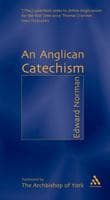
Edward Norman, prior to writing this book on 'Anglican Difficulties', composed a book entitled 'An Anglican Catechism'. That title was a bit unusual, given that the Book of Common Prayer in various national forms sometimes contains a question-and-answer catechism of sorts, but this was not any of those. It was a more theological development of the ideas that come out of the question 'what should an Anglican believe?' This book on difficulties addresses key questions of contention - the Anglican way is often held up as a the 'via media', the middle way, but it just as often succeeds in satisfying no one with this approach. The Anglican Communion at the moment is beset with difficulties, which include issues of proper and appropriate authority, interpretation of scripture and tradition, use of cultural context, and the very meaning of Anglicanism itself. These difficulties often default back to the issue of authority - not simply an issue of who has the actual power, but also on the legitimate exercise of that power, and what moral and ethical authority one can legitimately exercise and under what circumstances. Norman was considered part of the 'new Right' of the Church of England (the 'home church' of the Anglican Communion). I use the term 'was', because he has since left the Church of England to become a Roman Catholic. Despite serving most of his career as a Church of England cleric in reasonably high office, he nonetheless maintained that his views were Catholic (Norman is not unique in this - there is the common term Anglo-Catholic to describe a certain element in the Anglican world). Many interpreted this book as a 'ring and run' - some mainstream commentators described it as a 'scathing attack' on the Church of England, and in many regards they would be correct. Norman has rarely been one to pull punches, but also is extraordinarily precise in his verbal constructions, both in speaking and in writing. One might not agree with his ideas or his conclusions, but there is a quality of intelligence here. Norman states near the end of his text a comparison of the Anglican world and the Roman Catholic world (this was before his announcement of his leaving the Church of England for Rome). 'The future of the Church seems to be entrusted to the southern hemisphere, and its orthodoxy of teaching is guaranteed for so long as Rome itself retains centralised authority. The Anglican Communion, in contrast, is nothing more than a periodic conference of once like-minded individual Churches who have little in common now, but a colonial past.' Norman's principal problem with Anglicanism is not just the ambiguities of authority, but its incorporation of liberal ideas; this becomes clear in the final pages of his book. Throw into this liturgical changes (the Church of England shifted from adherence to the 1662 Book of Common Prayer to the new Common Worship texts) and sexuality issues (which are mentioned again and again in this text, and