


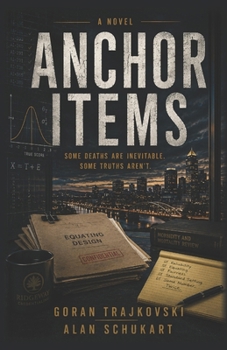
Anchor Items

The test is perfect. The provenance is poisoned.
Jovan Dimitrovski has spent thirty years making a number mean the same thing twice. A Macedonian-born psychometrician at an Atlanta credentialing body, he is the quiet authority behind the certification exams that decide who gets to work in American healthcare - the keeper of the anchor items, the handful of questions that never change, so that everything else can be measured against them.
Then a routine statistical review returns a result that should not exist: a scattered cohort of test-takers performing perfectly on exactly the wrong questions. Not cheaters - the evidence clears them. Something stranger. Sixty thousand practice questions are circulating in the market, lawful, excellent, and statistically indistinguishable from the secure exam itself. Nobody stole the questions. Something learned to write them.
As Jovan traces the flood backward - through data brokers, licensed corpora, and the digitized remains of a defunct storefront in Skopje - the trail bends toward a table in 1995, a winter of unpaid rent, and forty questions a brilliant young man once sold for four months' survival, certain the two halves of his life would never meet.
Now an AI has learned his craft from his own buried past. The exam scale is drifting. Forty-one thousand candidates are waiting on results. And the only person alive who can name the source of the corruption is the author of the audit - a man who must choose between a report that is safe and a report that is complete, knowing they cannot be the same document.
Anchor Items is a novel about measurement and the people it measures: immigrants and gatekeepers, fathers and daughters, the questions that hold still so the world can move. Written in cool, forensic prose that tightens like an audit, it stands alone - and completes the acclaimed sequence begun with Recommended Action and Contributing Factor: three novels about what our systems know, what they forget, and who pays when the two are reconciled.
For readers of literary thrillers about technology, conscience, and the price of a clean record.
Customer Reviews
ThriftBooks ® and the ThriftBooks ® logo are registered trademarks of Thrift Books Global, LLC
