


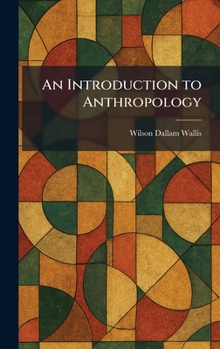
An Introduction to Anthropology

The book is organized into distinct sections that cover physical anthropology, the origins of man, and the complexities of social and cultural life. Wallis explores topics ranging from the anatomical differences between human races and the evidence of prehistoric life to the intricate development of language, religion, and economic structures. By examining the customs and institutions of various cultures, the author seeks to illuminate the universal patterns of human behavior and the processes of social change.
As a significant contribution to the social sciences, "An Introduction to Anthropology" provides readers with a clear understanding of how human societies organized themselves across history. It remains a valuable resource for those interested in the history of anthropological thought, offering detailed insights into the early scientific methods used to classify and understand the diversity of the human experience. This work is an essential read for students of history, sociology, and human biology.
This work has been selected by scholars as being culturally important, and is part of the knowledge base of civilization as we know it. This work was reproduced from the original artifact, and remains as true to the original work as possible. Therefore, you may see the original copyright references, library stamps (as most of these works have been housed in our most important libraries around the world), and other notations in the work.
This work is in the public domain in the United States of America, and possibly other nations. Within the United States, you may freely copy and distribute this work, as no entity (individual or corporate) has a copyright on the body of the work.
As a reproduction of a historical artifact, this work may contain missing or blurred pages, poor pictures, errant marks, etc. Scholars believe, and we concur, that this work is important enough to be preserved, reproduced, and made generally available to the public. We appreciate your support of the preservation process, and thank you for being an important part of keeping this knowledge alive and relevant.
Customer Reviews
ThriftBooks ® and the ThriftBooks ® logo are registered trademarks of Thrift Books Global, LLC
