


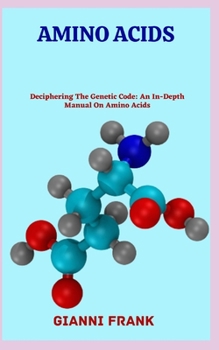
Amino Acids: Deciphering The Genetic Code: An In-Depth Manual On Amino Acids
No Customer Reviews

Proteins are constructed from amino acids, which are chemical substances. Each amino acid has a unique combination of an amino group (-NH2), a carboxyl group (-COOH), and a side chain. The majority of proteins contain one or more of the 20 standard amino acids.
Many functions in living organisms cannot function properly without amino acids. They are essential in the synthesis of proteins, where they are chained together in a certain order defined by the genetic code. Proteins are constructed from these chains, which fold into specific three-dimensional shapes.
Amino acids are essential for more than just making proteins. Enzyme catalysis, cell signaling, neurotransmitter modulation, and chemical transport across cell membranes are all processes that require these proteins. Some amino acids are building blocks for the production of peptide hormones, nucleotides, and neurotransmitters.
Size, charge, and hydrophobicity are only some of the ways in which amino acids contribute to protein structure and function. The distinctive features and functional capabilities of a protein are established by the precise arrangement of amino acids within the protein itself.
Amino acids serve an important role in protein structure, regulation, and metabolism, and are thus fundamental to the health of all living systems.
Many functions in living organisms cannot function properly without amino acids. They are essential in the synthesis of proteins, where they are chained together in a certain order defined by the genetic code. Proteins are constructed from these chains, which fold into specific three-dimensional shapes.
Amino acids are essential for more than just making proteins. Enzyme catalysis, cell signaling, neurotransmitter modulation, and chemical transport across cell membranes are all processes that require these proteins. Some amino acids are building blocks for the production of peptide hormones, nucleotides, and neurotransmitters.
Size, charge, and hydrophobicity are only some of the ways in which amino acids contribute to protein structure and function. The distinctive features and functional capabilities of a protein are established by the precise arrangement of amino acids within the protein itself.
Amino acids serve an important role in protein structure, regulation, and metabolism, and are thus fundamental to the health of all living systems.
Format:Paperback
Language:English
ISBN:B0CCCJ4XQS
ISBN13:9798853295636
Release Date:July 2023
Publisher:Independently Published
Length:98 Pages
Weight:0.23 lbs.
Dimensions:0.2" x 5.0" x 8.0"
Customer Reviews
0 rating
Copyright © 2026 Thriftbooks.com Terms of Use
| Privacy Policy | Do Not
Sell/Share My Personal Information | Cookie Policy | Cookie Preferences | Accessibility Statement
ThriftBooks® and the ThriftBooks® logo are registered trademarks of Thrift Books Global, LLC
ThriftBooks® and the ThriftBooks® logo are registered trademarks of Thrift Books Global, LLC
