


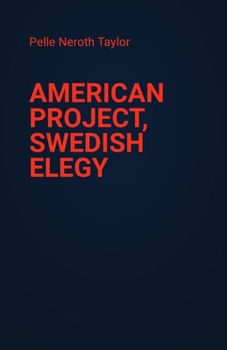
American Project, Swedish Elegy

Between the end of the Second World War and the present, Europe acquired a conscience it had not grown itself. It arrived through the screen, in the vocabulary of an American quarrel about race and descent, and it settled in countries whose history had never called for it. Sweden took it furthest. It wrote the principle into its constitution, built a state agency to teach it, and opened its borders in its name.
American Project, Swedish Elegy follows that inheritance from the CIA money behind the first European movement, through Tony Blair's Atlantic Britain and the re-education of Germany, to a council chamber in V sterg tland where two women lost an argument about a bicycle shed. Then it turns on the man doing the observing: a British-Swedish journalist who spent ten years warning about the border while the decisive change was happening elsewhere, in a birth rate lower than any the country has recorded.
It opens with an argument the author lost, to his mother, on the morning after a festival in Malm . It is written as an elegy, with the figures set beside the lives and the evidence against its author left on the page.
Customer Reviews
ThriftBooks ® and the ThriftBooks ® logo are registered trademarks of Thrift Books Global, LLC
