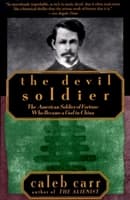
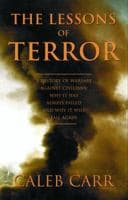
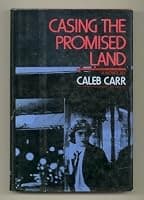
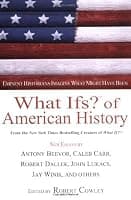
A military historian with a ripe imagination, Caleb Carr is best known for his murder mysteries set in late-19th-century New York. More recently, he has turned his attention to an imagined future and an all-too-real present, but he can always be relied upon for thought-provoking writing that richly evokes its own period and politics.
Caleb Carr (a historian whose penetrating insight I have always admired) and James Chace deliver a fascinating analysis of the development American foreign policy, and offer a compelling explanation for the abandonment of the principles expounded in Washington's Farewell Address. They postulate that events in the oft-forgotten War of 1812 with Great Britain, a mere 16 years after Washington's retirement, so wounded the psyche of infant republic that it caused a shift from the "great rule of conduct...when we will take such an attitude as will cause the neutrality we may at any time resolve upon to be scrupulously respected" to what in modern times we call "Projection of Force." The traumatic event? When a contingent of Royal Marines landed, razed Washington DC, sent the President and other officers scurrying off into the night, while the US military ... did nothing in particular. This, needless to say, freaked the country out. Carr and Chace see this as a "Tipping Point," and in scholarly fashion go on to chronicle the history of the United States through its conflicts with Mexico and Spain in the 19th century. It, of course, doesn't stop there. They show how we continued throughout the 20th century to, against the warnings of Washington, "forego the advantages of so peculiar a situation [and] quit our own to stand upon foreign ground." How we "by interweaving our destiny [and] entangl[ing] our peace and prosperity in the toils of European ambition, rivalship, interest, humour, [and] caprice" find ourselves -- well, where we are today -- chasing windmills in the quest for absolute security. It is amazing how two Georges can be so different. Read it.