


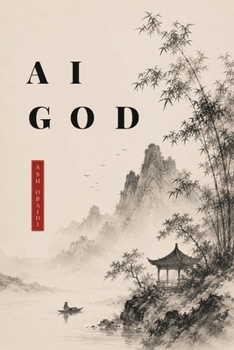
AI God

In a near-future society where Sunday mass has emptied and the fear of God no longer keeps people in line, the state offers a replacement: the Integrated Civic Harmony System, an AI-driven social credit platform that decides who eats, who travels, who works. Through a single app, it watches everything you do. It asks nothing of what you believe.
Raised in a devout Catholic family yet never quite a believer, the narrator has always understood religion less as faith than as a mechanism - fear and order braided together, for better and worse. When that mechanism collapses and an algorithm rises to take its place, he recognizes the architecture instantly. What he doesn't expect is to find, in the system's blind spots, a quiet way to fight back: not with sabotage, but with truth - feeding the model the data of lives it was never built to see.
AI God is a literary novel about the systems we build to govern each other, the gap between what they measure and what they miss, and the strange persistence of faith - in God, in data, in each other - long after the old reasons for believing have gone. Written in long, searching, interior sentences, it asks what remains of a person when every action is counted and nothing of the interior life is ever truly known.
Customer Reviews
ThriftBooks ® and the ThriftBooks ® logo are registered trademarks of Thrift Books Global, LLC
