


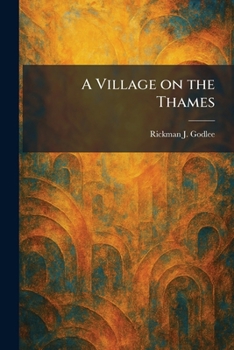
A Village on the Thames

Select Format
Select Condition 
Book Overview
"A Village on the Thames" is an evocative and detailed exploration of life in a traditional English settlement along one of the world's most iconic waterways. Written by Rickman J. Godlee, this work captures the essence of Whitchurch-on-Thames and its surrounding landscape, offering a window into the historical and social fabric of the Thames valley during the early 20th century.
The narrative delves into a variety of local subjects, including the natural history, geology, and architecture of the region. From the intricacies of the parish church to the seasonal changes of the river itself, Godlee provides a meticulous account of the people and places that define the area. The work emphasizes the deep connection between the Thames and the community, illustrating how the river influenced local economy, recreation, and daily routines.
Rich in historical anecdotes and descriptive detail, "A Village on the Thames" serves as both a topographical study and a literary tribute to the English countryside. It remains a valuable resource for those interested in British local history, social evolution, and the enduring charm of riverside life in Oxfordshire and Berkshire.
This work has been selected by scholars as being culturally important, and is part of the knowledge base of civilization as we know it. This work was reproduced from the original artifact, and remains as true to the original work as possible. Therefore, you may see the original copyright references, library stamps (as most of these works have been housed in our most important libraries around the world), and other notations in the work.
This work is in the public domain in the United States of America, and possibly other nations. Within the United States, you may freely copy and distribute this work, as no entity (individual or corporate) has a copyright on the body of the work.
As a reproduction of a historical artifact, this work may contain missing or blurred pages, poor pictures, errant marks, etc. Scholars believe, and we concur, that this work is important enough to be preserved, reproduced, and made generally available to the public. We appreciate your support of the preservation process, and thank you for being an important part of keeping this knowledge alive and relevant.
Customer Reviews
ThriftBooks ® and the ThriftBooks ® logo are registered trademarks of Thrift Books Global, LLC
