


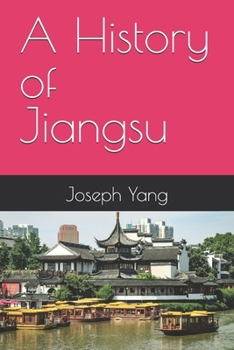
A History of Jiangsu
No Customer Reviews

*A History of Jiangsu* offers a comprehensive exploration of the province often described as the economic and cultural heartland of China. Known for millennia as the "land of fish and rice," Jiangsu's identity is defined by its relationship with water-specifically the life-giving Yangtze River and the monumental Grand Canal. This narrative traces the region's journey from its Neolithic roots and the ancient, legendary State of Wu to its eventual integration into the unified Chinese empire. The book illustrates how Jiangsu transitioned from a peripheral frontier to an indispensable engine of imperial wealth and a sanctuary for Han Chinese culture during eras of northern division. The book delves into the golden ages of the Tang, Song, and Ming dynasties, during which Jiangsu's cities became the world's most sophisticated metropolises. It paints a vivid picture of Yangzhou as a cosmopolitan salt-trading hub, Suzhou as a center of unparalleled silk production and garden design, and Nanjing as the "Southern Capital" of the Ming. Readers are introduced to the refined "Jiangnan" culture, where landscape painting, Kunqu opera, and scholar-gardens set the aesthetic standards for an entire civilization. These chapters highlight the profound intellectual and artistic legacy that continues to define the province's character in the present day. The narrative takes a somber turn into the 19th and 20th centuries, documenting the immense turmoil that nearly erased this prosperity. From the devastating destruction of the Taiping Rebellion to the establishment of the Republic of China in Nanjing, the book explores the political and social shifts that preceded the Second Sino-Japanese War. A significant portion of the work is dedicated to the catastrophic impact of the Japanese invasion and the Nanjing Massacre, providing a sobering account of the scars left on the collective memory of the province. This period of conflict concludes with the Chinese Civil War and the eventual establishment of the People's Republic of China. Moving into the contemporary era, the book chronicles Jiangsu's dramatic rebirth following the 1978 Reform and Opening-Up period. It details the rise of the "Sunan Model" and the explosion of Township and Village Enterprises that transformed rural farmers into industrial workers. The story follows the province's emergence as a global manufacturing powerhouse, powered by international partnerships like the Suzhou Industrial Park and the high-tech electronics clusters of Kunshan. This transition highlights the sheer economic dynamism that turned once-impoverished counties into world-class hubs for electronics, chemicals, and shipping. In its final sections, the book examines the challenges facing Jiangsu in the 21st century. As the province matures from the "workshop of the world" into a hub for high-tech innovation, it must balance rapid urbanization with the preservation of its ancient cultural heritage. The narrative addresses contemporary social issues, such as the demographic shift of an aging population, the complex legacy of the one-child policy, and the persistent development gap between the north and south. This history concludes by looking toward a future where Jiangsu remains a critical node in a globalized world, navigating the delicate path between its historic past and its high-tech future.
Format:Paperback
Language:English
ISBN:B0GZGQTLTK
ISBN13:9798195412227
Release Date:May 2026
Publisher:Independently Published
Length:162 Pages
Weight:0.50 lbs.
Dimensions:0.3" x 6.0" x 9.0"
Related Subjects
HistoryCustomer Reviews
0 rating
Copyright © 2026 Thriftbooks.com
Terms of Use | Privacy Policy | Do Not Sell/Share My Personal Information | Cookie Policy | Cookie Preferences | Accessibility Statement
ThriftBooks ® and the ThriftBooks ® logo are registered trademarks of Thrift Books Global, LLC
ThriftBooks ® and the ThriftBooks ® logo are registered trademarks of Thrift Books Global, LLC
