


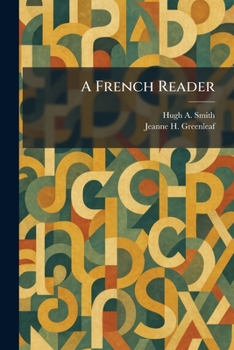
A French Reader

Select Format
Select Condition 
Book Overview
"A French Reader" is a comprehensive pedagogical tool designed to facilitate the acquisition of the French language through structured reading and literary analysis. Compiled by Hugh A. Smith and Jeanne H. Greenleaf, this volume serves as a vital bridge between elementary grammar and the study of advanced literature. It features a curated selection of texts ranging from simplified narratives to authentic excerpts from renowned authors, providing students with a rich variety of linguistic styles and vocabularies.
The pedagogical approach focuses on building reading comprehension, expanding vocabulary, and introducing the cultural nuances of French-speaking societies. Ideal for students and educators alike, the work emphasizes the importance of contextual learning, allowing readers to engage with the language in its natural form while reinforcing essential grammatical structures. By offering a diverse array of stories and informative passages, "A French Reader" fosters both linguistic competence and an appreciation for the French literary tradition. This classic educational resource remains a valuable asset for those seeking a systematic and engaging method for mastering French literacy and reading comprehension.
This work has been selected by scholars as being culturally important, and is part of the knowledge base of civilization as we know it. This work was reproduced from the original artifact, and remains as true to the original work as possible. Therefore, you may see the original copyright references, library stamps (as most of these works have been housed in our most important libraries around the world), and other notations in the work.
This work is in the public domain in the United States of America, and possibly other nations. Within the United States, you may freely copy and distribute this work, as no entity (individual or corporate) has a copyright on the body of the work.
As a reproduction of a historical artifact, this work may contain missing or blurred pages, poor pictures, errant marks, etc. Scholars believe, and we concur, that this work is important enough to be preserved, reproduced, and made generally available to the public. We appreciate your support of the preservation process, and thank you for being an important part of keeping this knowledge alive and relevant.
Customer Reviews
ThriftBooks ® and the ThriftBooks ® logo are registered trademarks of Thrift Books Global, LLC
