


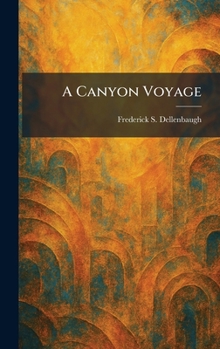
A Canyon Voyage

"A Canyon Voyage" is a compelling firsthand account of the second Powell expedition down the Green and Colorado Rivers. Written by Frederick S. Dellenbaugh, who served as the expedition's artist and assistant topographer, the narrative provides a detailed and vivid record of one of the most significant explorations of the American West. Spanning the years 1871 and 1872, the work captures the daily struggles, scientific discoveries, and breathtaking landscapes encountered by the crew as they navigated treacherous rapids and mapped uncharted territories.
The book offers an intimate look at the leadership of Major John Wesley Powell and the camaraderie of the men who braved the unknown. Dellenbaugh's prose combines technical precision with artistic sensibility, illustrating the geological wonders of the Grand Canyon and the surrounding regions. This work stands as a cornerstone of Western Americana, preserving the spirit of adventure and the rigorous pursuit of knowledge that characterized late 19th-century geographical surveys. It is an essential read for those interested in the history of exploration, the development of the American Southwest, and the enduring legacy of the Colorado River expeditions.
This work has been selected by scholars as being culturally important, and is part of the knowledge base of civilization as we know it. This work was reproduced from the original artifact, and remains as true to the original work as possible. Therefore, you may see the original copyright references, library stamps (as most of these works have been housed in our most important libraries around the world), and other notations in the work.
This work is in the public domain in the United States of America, and possibly other nations. Within the United States, you may freely copy and distribute this work, as no entity (individual or corporate) has a copyright on the body of the work.
As a reproduction of a historical artifact, this work may contain missing or blurred pages, poor pictures, errant marks, etc. Scholars believe, and we concur, that this work is important enough to be preserved, reproduced, and made generally available to the public. We appreciate your support of the preservation process, and thank you for being an important part of keeping this knowledge alive and relevant.
Customer Reviews
ThriftBooks ® and the ThriftBooks ® logo are registered trademarks of Thrift Books Global, LLC
