42 Days for Murder
Conditions
A read copy, but remains in excellent condition.
Formats
Conditions
A read copy, but remains in excellent condition.
Conditions
A read copy, but remains in excellent condition.
Formats
Conditions
A read copy, but remains in excellent condition.
A nightclub piano player turned private detective has six weeks to find a missing woman in Reno, and every day pushes him deeper into corruption, vice, and murder. Shean Connell comes to town on what first looks like a domestic job: a wealthy man's wife has gone to Reno for a divorce, and he wants to know why. But Reno is no quiet refuge. Behind the city's easy-divorce business are gangsters, crooked officials, dope runners, prostitution rackets, blackmail, and men who know how to make trouble disappear.
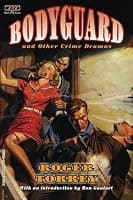
First published in 1938, 42 Days for Murder is Roger Torrey's only novel and a hardboiled private-eye story from one of the writers associated with Black Mask magazine. The title's forty-two days are the six weeks required for a Reno divorce, giving Connell a deadline and the plot a tightening clock. Review and bibliographic sources identify the novel as the first Shean Connell book, originally published by Hillman-Curl in 1938, and note Connell's role as a private detective drawn into the wife's disappearance and the city's criminal underworld. For readers of classic noir, hardboiled detective fiction, Reno crime novels, pulp private eyes, and Depression-era American crime writing, 42 Days for Murder is exactly the sort of tough, neglected Black Curtain title worth bringing back.
This description may be from another edition of this product.The original reviewer wrote a well constructed piece on 42DTM. He made a couple of key points. The first being that the 'lone man takes on a whole town' genre has a WHOLE lot of entrants, many of them from more prolific writers (e.g., Cain, Bellem). The second point was that the pacing of the book has its fits and starts, and that it slackens at the end when the genre inevitably rises to the cliched 'fever pitch.' I can't disagree with either of those points, but I must say that I was really taken back in time to the early part of the last century when I read this. If you've ever heard about and been intrigued by 'wide open towns', 'roadhouses', or 'towns where the fix is in', then there are few finer books for you to hear with your own ear what it felt like to move around in one. I agree that Bellem or Cain gives the reader more rock 'em, sock 'em pacing, but the machinations of the protagonist as he fights a town built to keep insiders safe and outsiders out really is quite interesting. There are many admirable scenes in this book that I would expect to find in someone like Jim Thompson, who could pull this stuff off without even breaking a sweat. This is definitely a book for a narrow taste range, but if you have interest in what life was like in the west 70-80 years ago, and it was a hack of an interesting life even without the Internet, then dive right in.