"Every morning I jump out of bed and step on a land mine. The land mine is me. After the explosion, I spend the rest of the day putting the pieces back together. Now, it's your turn. Jump! Zest. Gusto. Curiosity. These are the qualities every writer must have, as well as a spirit of adventure. In this exuberant book, the incomparable Ray Bradbury shares the wisdom, experience, and excitement of a lifetime of writing. Here are practical tips on the art of writing from a master of the craft-everything from finding original ideas to developing your own voice and style-as well as the inside story of Bradbury's own remarkable career as a prolific author of novels, stories, poems, films, and plays. Zen In The Art Of Writing is more than just a how-to manual for the would-be writer: it is a celebration of the act of writing itself that will delight, impassion, and inspire the writer in you. In it, Bradbury encourages us to follow the unique path of our instincts and enthusiasms to the place where our inner genius dwells, and he shows that success as a writer depends on how well you know one subject: your own life.
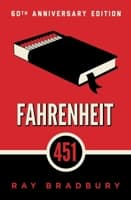
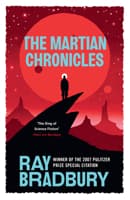
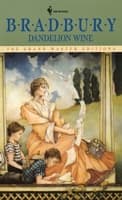
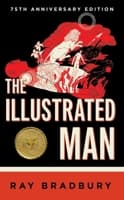
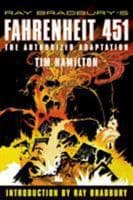
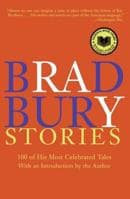
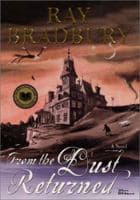
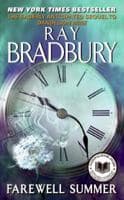
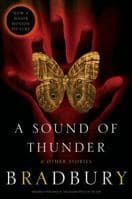
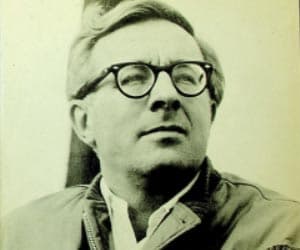
Best known for his works Fahrenheit 451, The Illustrated Man, and The Martian Chronicles, Ray Bradbury is one of America's most highly regarded and successful novelists, short story writers, essayists, playwrights, and screenwriters. Also a poet, Ray Douglas Bradbury was born in Illinois in 1920 and raised in Los Angeles, where he ended his formal education by graduating from high school. Bradbury, who died in 2012, published more than thirty books, close to 600 short stories, and numerous poems, essays, and plays. He adapted sixty-five of those stories for television's anthology Ray Bradbury Theater. Many of his works have been adapted into comic books, films, and television shows (including the 100th episode of The Twilight Zone). Internationally renowned for his science fiction, he never learned to drive a car. Bradbury's many honors include the National Medal of Arts, the O. Henry Memorial Award, the World Fantasy Award for Lifetime Achievement, the Grand Master Award from the Science Fiction Writers of America, and the National Book Foundation Medal for Distinguished Contribution to American Letters. Additionally, an asteroid has been named in his honor, Apollo 15 astronauts named a moon crater "Dandelion Crater" after his book Dandelion Wine, and he has a star on the Hollywood Walk of Fame.
Even in non-fiction, Bradbury writes with prose that stretches the mind and transports the reader to far-away places. In this collection of essays, Bradbury illuminates truths about writing and lays out the roadmap that he himself followed to become an excellent writer. This book contains practical tips in addition to personal stories. It is everything you’d expect from one of the greatest writers of the 20th century.
0
★★★★★
A Must For Any Aspiring Writer
By Thriftbooks.com User, December 15, 2005
Written by one of the truly great writers of our time, Ray Bradbury encourages and imparts some solid tips for writing well. Definitely a must for any aspiring writer, Bradbury gives advice on how to come up with marketable story ideas and how to approach writing them. It's like being guided along by a great writer who you would never meet any other way. One of the tips he offers is that quantity leads to quality. So his advice: keep writing. He also tells us that fiction can be more truthful than nonfiction. Then he shows us how to write down meaningful words in our lives that could possibly lead to compelling stories. It's definitely worth your time to spend a few hours with a fiction master. You never know what you may take away from it. Great book!
2
★★★★★
No Writer Should Be Without It
By Thriftbooks.com User, June 10, 2002
If you've ever wondered, "Why aren't people more passionate about their work?" then you've never read 'Zen in the Art of Writing.' Whether or not you happen to like Ray Bradbury's work, you can't dispute his passion for writing, which is evident from page one. Bradbury (who turns 82 this year) is a writer of enormous output. In this series of essays, the author lets us in on many of his secrets, but the bottom line is this: If you love what you do, and are excited about it, nothing can stop you. Much of Bradbury's writing is connected with his childhood experiences and memories, which allows him to jump into writing like a kid jumping into a swimming pool on a hot summer day. Bradbury recounts many of his writing experiences and influences in the book and they are all fascinating. I can't imagine any writer (or lover of stories) who would not enjoy this book. It can be read in an afternoon, but savored for a lifetime. Thank you, Mr. Bradbury, for a real treasure.
3
★★★★★
Tremendously Inspiring
By Thriftbooks.com User, February 21, 2002
There are two books on writing that truly inspire me: this one and Telling Lies for Fun and Profit by Lawrence Block. I keep them both at hand, and when my passion flags, I pick one of them up and read it, and they refuel my flame.This is really a collection of essays, mostly from introductions to other books. However, don't let that detract from their message. To write you must, simply, write. Write until it hurts, and don't stop just because you feel insecure. Bradbury's style won't work for everyone. He uses free-association to begin his stories. He simply types a word and goes from there. Not all of us can do that, but his passion and love for his work comes through the pages. He also encourages writers to find their own voice through practice, and to write until grammar and story structure become unconscious.This is a relatively quick read and one that will remain with you long after you finish it. "Now, go, and do likewise."
2
★★★★★
Unmitigated Excellence
By Thriftbooks.com User, October 15, 1999
This is an excellent piece from an excellent writer. For any would-be writer, this is an exceptional guide that will teach the basics of the creative writing process. Bradbury emphasizing writing by a method of free-association. He discourages writing that conforms to popular beliefs of society. He says that writing to please others is a great fault of many authors. One should write about his own interests and hates, this will strike passion in writing, which is a key ingrediant to success in the field. He explains that excellent writing ideas spring from the subconscious mind, or muse as Bradbury puts it. One must learn how to find his muse, feed his muse, and keep his muse...To effectively capture Bradbury's powerful message, one should read this piece of excellence him/herself.
1
★★★★★
A rare book that offers insights into the writing process.
By Thriftbooks.com User, March 13, 1999
As a rule I find books that profess to "explain" the writing/creative process to be useless at best and numbing at worst. Bradbury, however, isn't interested in writing a "how-to" book. This is because he rightly considers the creative process to be impossible to neatly sum up or explain.Still, this book doesn't mystify writing either. Bradbury reminds the reader/writer that the creative process is highly individual and that the best source that we have when we write is ourself: our memories, our experiences and our imagination, which allows us to take the stuff inside us and transform it into something fresh and new. His discussions of how he got the ideas for some of his stories (particularly fascinating to me because I had read all of them) are gems, offering insights that are fascinating in their own right and instructive to those examining their own methods of writing.As a playwright, this book was an inspiration to me when I first read it several years ago, and it continues to be to this day. This is possibly the only book on writing that I would recommend to anyone who is a writer who thinks he/she might want to be one.
On the eve of what would have been Ray Bradbury's 99th birthday, we celebrate the prolific author who passed away in 2012. A largely self-educated man, Bradbury wrote more than 30 books and close to 600 short stories.