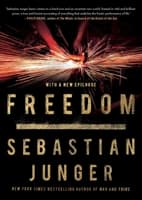
A NEW YORK TIMES BESTSELLERA near-fatal health emergency leads to this powerful reflection on death--and what might follow--by the bestselling author of Tribe and The Perfect Storm. For years as an award-winning war reporter, Sebastian Junger traveled to many front lines and frequently put his life at risk. And yet the closest he ever came to death was the summer of 2020 while spending a quiet afternoon at the New England home he shared with his wife and two young children. Crippled by abdominal pain, Junger was rushed to the hospital by ambulance. Once there, he began slipping away. As blackness encroached, he was visited by his dead father, inviting Junger to join him. "It's okay," his father said. "There's nothing to be scared of. I'll take care of you." That was the last thing Junger remembered until he came to the next day when he was told he had suffered a ruptured aneurysm that he should not have survived. This experience spurred Junger--a confirmed atheist raised by his physicist father to respect the empirical--to undertake a scientific, philosophical, and deeply personal examination of mortality and what happens after we die. How do we begin to process the brutal fact that any of us might perish unexpectedly on what begins as an ordinary day? How do we grapple with phenomena that science may be unable to explain? And what happens to a person, emotionally and spiritually, when forced to reckon with such existential questions? In My Time of Dying is part medical drama, part searing autobiography, and part rational inquiry into the ultimate unknowable mystery.
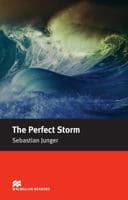
With his hair-raising and enthralling true adventure story, the blockbuster The Perfect Storm , renowned investigative journalist Sebastian Junger chronicled a story of heroism and tragedy wrought by a tropical storm while single-handedly reviving a new genre: the true-life disaster tale. His latest, A Death in Belmont , investigates his family's eerie connection to the Boston Strangler murders.
Honestly, the framework for the story was confusing and annoying at first, I didn't know yet why he oscillated so starkly back and forth between his personal, true story and experience, and seemingly obtuse, heady, deep-dives into the history of medical inventions, mathematic formulas, and physics discoveries, and the people behind them. HOWEVER, as the book progressed, I started seeing what he was doing- the history was creating a framework to view not only his near death experience but a framework that ties together the human discoveries *and* the mysteries, the unknowns, that we honestly can not fully explain or rule out as definitively and tidily as our logical brains want to. And he wrapped it up in a way that shows how beautiful nuanced life is, appreciative of all sides, he wasn't righteous any which way. He definitely applied his journalistic sensibilities and skills to this topic. I will read it again, it's a short read, but I know I'll enjoy it more the second time because I'll relax into all the history and science portions as much as I did towards the middle of the book, when I realized what he was doing.