Skip to content
ISBN: 1020194901
ISBN13: 9781020194900

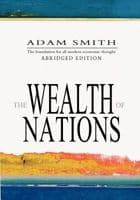
The Wealth Of Nations, Part 1

$39.95List Price: $39.95
ISBN: 1020194901
ISBN13: 9781020194900
Formats

Conditions

A brand-new, unused copy in perfect condition.

Formats

Conditions

A brand-new, unused copy in perfect condition.

See all 116 editionsfrom $7.09

Book Overview

An essential work in the fields of economics and political theory, Adam Smith's The Wealth of Nations, Part 1 lays out his influential ideas about the division of labor, free markets, and the role of government in regulating economic activity. Originally published in 1776, this seminal work remains a cornerstone of classical liberalism and is a must-read for anyone interested in the history of economic thought.

This work has been selected by scholars as being culturally important, and is part of the knowledge base of civilization as we know it.

This work is in the "public domain in the United States of America, and possibly other nations. Within the United States, you may freely copy and distribute this work, as no entity (individual or corporate) has a copyright on the body of the work.

Scholars believe, and we concur, that this work is important enough to be preserved, reproduced, and made generally available to the public. We appreciate your support of the preservation process, and thank you for being an important part of keeping this knowledge alive and relevant.

Format:
Hardcover
Language:
English
ISBN:
1020194901
ISBN13:
9781020194900
Release Date:
July 2023
Publisher:
Legare Street Press
Length:
466 Pages
Weight:
1.82 lbs.
Dimensions:
1.0″ × 6.1″ × 9.2″
BusinessBusiness & InvestingHistorySocial ScienceSocial Sciences

More by Adam Smith

Customer Reviews

1 customer rating | 1 review
Write a Review

Economics, history, and life are not individual subjects.

All my life, I’ve been bombarded with one economist versus another. Each time, Adam Smith always showed up. So, after hearing snippets of his book and his ideas over and over and over again, I thought, “Ah, I know Adam Smith.” Well, I might’ve been a tad premature in thinking that I knew Adam Smith. As you will, too, when you read this book, “An Inquiry into the Nature and Causes of the Wealth of Nations.” Sometimes split into volumes. Some are abridged (avoid these). There are different commentators and editors. I figured that it was finally time to read Adam Smith for myself instead of taking snippets out of context. At first, I began to think that I had made a big mistake. If you read the Constitution of the United States, then you would notice that you are always told the impressive parts as separate statements, and they leave out all the boring details and sometimes important minutiae. Well, it looks like they did the same thing to poor Adam. On the surface, as you start reading this book, you start to wonder what makes Adam Smith so important, as it seems so primitive. Reading on, you realize that he came from an era that was way before the information age. His samples seem primitive and simple. He repeats and repeats and repeats himself. You start to wonder if this is the same Adam Smith that you studied in school. You will want to hang in there, though, as soon as you realize that Adam Smith had to start with the fundamentals of history and primitive economics. After pages of history, he will finally get to his time. Yes, this book is ancient, and the examples are not usually relevant today. However, just as you decide that you made a horrible mistake in reading “An Inquiry into the Nature and Causes of the Wealth of Nations,” small jewels of insight into not only economics and history but life itself reveal themselves in his everyday descriptions and observations. I had to buy a book on the English poor laws as the aforementioned as everybody knew about them. Many other subjects and reference books all of a sudden appeared on my desk as I realized that with all the depth of Adam Smith, this is just the tip of the iceberg. Yes, sometimes Smith can get boring and very redundant. However, whatever you do, do not skip any pages. Just as soon as you know what he is going to say, he comes up with another interesting angle. He not only covers economics from his version of a practical view, but soon he covers the history of education and many other subjects besides commerce. I found that he covers the effect of religions on people and people on religions. He covers schools and how they got started, and their potential for modifying society. He covers the economics of war and other major world-changing phenomena. Just as you think he is talking about his world and his time. You pick up a newspaper and see the very same type of events and economic arguments. For me, of all things, I was able to get a new view of the national debt, and it changed my view from a necessary evil to an excellent opportunity. You, too, will find new insights or views on economics that you were already sure you had under your belt. So, enjoy reading Adam Smith not as a necessity but for the fun of getting new views directly from the author.

0