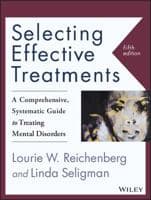
A comprehensive guide to the most effective clinical treatments "The clear linkage of complex research-based diagnoses with practical therapeutic interventions is best spelled out in this book There is nothing better to read on this subject -- a must for all professionals and students in the mental health field."-- Fred Bemak, associate professor, wellness and human services, School of Physical Activity and Educational Services, The Ohio State University This thoroughly revised and updated version of the classic book, Selecting Effective Treatments presents a comprehensive, systematic, and research-based approach to the diagnosis and treatment of all the major mental disorders found in the Diagnostic and Statistical Manual of Mental Disorders. A new chapter contains current information on the diagnosis and treatment of mental disorders in infants, children, and adolescents.
Easy to read, low on jargon and authoritative, this is the reference work on mental health therapies that should be on the every therapist's bookshelf. Seligman and Reichenberg have filled a vacuum in the genre: the go-to book for psychologists, counselors, social workers, psychiatric nurses and other non-medical professionals -- those who provide the majority of treatment for mental disorders. The authors don't advocate specific theoretical models, instead providing clinicians with a well-organized, user-friendly compendium of the latest approaches, the findings on their relative effectiveness and a unique point of view: that the most effective treatment is one that uses the innate strengths of the therapist together with the most case-appropriate treatment.
0
★★★★★
Great
By Thriftbooks.com User, September 24, 2007
The book came in a timely manner and was in excellent condition, as advertised. Thank you so much, I really appreciate it.
0
★★★★★
A Must Have Reference
By Thriftbooks.com User, August 11, 2005
This book is excellent! It is very reader friendly and practical; not only does it describe the disorders thoroughly but it also discusses typical client characteristics, preferred therapist characteristics,tells intervention strategies that research has found works best for the particular disorder, and then provides a detailed treatment plan, along with, a case study. I found this book to be very useful for counseling professionals and students. It is also helpful when studying for the NCE Or NMHCE exam!
0
★★★★★
First-class resource for the mental health practioner.
By Thriftbooks.com User, December 31, 2002
The author describes her book as being a "comprehensive, systematic guide to treating mental disorders" and comprehensive and systematic it is! Seligman's work is research-based, yet practically oriented. The approach is a cogent, focused, rubric for diagnosis and treatment planning. As a practioner-to-be,this book has been of enormous benefit because it "ties it all together." Professor Seligman begins each section with a description of the disorder, then gives an overview of the characteristics of people who typically present with the disorder; she also gives an "overview of teh qualities of style and personality that typify clinicians likely to be successful in treating the disorder, along with a review of the research on treatment and information on the prognosis." One work that does all of this? You can't go wrong.