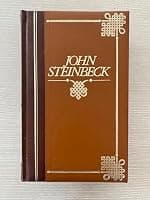
Each working day from January 29 to November 1, 1951, John Steinbeck warmed up to the work of writing East of Eden with a letter to the late Pascal Covici, his friend and editor at The Viking Press. It was his way, he said, of "getting my mental arm in shape to pitch a good game."
Steinbeck's letters were written on the left-hand pages of a notebook in which the facing pages would be filled with the test of East of Eden. They touched on many subjects--story arguments, trial flights of workmanship, concern for his sons.
Part autobiography, part writer's workshop, these letters offer an illuminating perspective on Steinbeck's creative process, and a fascinating glimpse of Steinbeck, the private man.
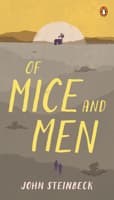
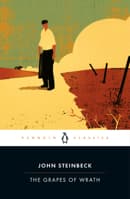
John Steinbeck, Jr. (born February 27, 1902 - December 20, 1968) was an American writer best known for the novel Grapes of Wrath, for which he won a Pullitzer Prize, and the novella Of Mice and Men. He wrote 27 books in total, including six non-fiction books, and received the Nobel Prize for Literature in 1962. Despite his literary success, Steinbeck remains a controversial author, due to anti-captialist themes in Of Mice and Men and Grapes of Wrath, and his books have been banned from various schools and libraries since their publication. Other notable Steinbeck works include East of Eden (1952), Travels with Charley (1960), and In Dubious Battle (1936).
This book gives the reader a unique insight into the day-to-day thoughts and workings of a writer's mind. Steinbeck may not be to everyone's taste, but he can't be denied his place in American literary history. It's difficult to imagine any writer being so honest about the problems he faced in trying to produce a book of this kind - an effort that is recorded every step of the way by this determined but troubled writer
0
★★★★★
Highly recommended
By Thriftbooks.com User, March 7, 2001
Steinbeck wrote the lengthy EAST OF EDEN saga straight through, from January to the first of November, in 1951. Every weekday, he sharpened his beloved pencils, sat down and warmed up, writing in the form of a letter to his friend and publisher, Pascal Covici. The letters he entered on the left side of the manuscript book Covici hand given him; on the right side, after clearing his mind and setting out the days' goals, he'd write his story, averaging about 1,500 words a day. JOURNAL OF A NOVEL collects those daily addresses to Covici, to whom EAST OF EDEN is dedicated.On the one hand, JOURNAL OF A NOVEL is instructive in how to use journaling to order one's demons, to focus and forge ahead. More important, it brings the reader right up to the man, and Steinbeck is a fascinating person to know. At age 48 when he produced this, he is twice divorced, happily remarried a third time, engaged in fatherhood and transplanted to New York. He is a whittler, a tinkerer, an inventor. His credo is, why pay someone to do something badly that he can do just as badly himself. He maintains an active family, professional and social life that he chattily reports and offers some prescient observations on the Marshall Plan and MacArthur. He is not without his depressive cycles, but at this point in his life he is more understanding of them and never lets them interfere with his work. His resolve is extraordinary.It is especially rich to read this following WORKING DAYS, the journal he kept as he wrote THE GRAPES OF WRATH. You get a sense of personal growth and a fuller sense of the middle of the 20th century through his eyes.Highly recommended.
1
★★★★☆
A Writer at Work
By Thriftbooks.com User, August 3, 2000
The things that writers do to get to the point where they can write good fiction are almost as interesting as the novels they create.If you have ever wondered what the dedication in East of Eden means (or what Steinbeck originally called the book) this is the place to find it. Peek into the relationship between a great writer and his publisher. Marvel as he discusses the problems that come up from day to day during the process of writing (including finding the right kind of pencil).This book provides a unique insight into what it must be like to live with genius.
0
★★★★☆
Intimacy of a writer
By Thriftbooks.com User, January 30, 2000
Steinbeck's Journal of a Novel invites the reader into his private chambers, sharing his thoughts and daily activities surrounding the process of composing a classical literary work. From the minute details of how to sharpen a pencil, and even building a mechanical sharpener, to his dwelling and the landscape from his window, the relationships with his editor and his unusual family, his open sincerity brings us into the real world of a writer and the circumstances that provoke or surround the creation of a masterpiece, and shed light into the question of how, exactly, do writers write. -Ney Villamil, Mexico.
0
★★★★★
Wonderful writing, cheap paper.
By Thriftbooks.com User, February 1, 1999
Steinbeck warmed up for each writing session with his diary or letters to friends. This is the journal he maintained while writing East of Eden, his magnum opus. Interesting, occasionally provocative, sometimes a brilliant phrase that lingers in your mind and comes back to haunt you unbidden. Regretfully, the publisher has chosen cheap, nasty paper like newsprint but charges as if it were quality.