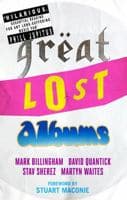
Most books about the Beatles reveal the big picture first and ask questions afterward. This book reverses that approach. It takes a fresh and often funny look at the magnificent and sometimes idiotic career path of the Beatles through the prism of one vital album -- a record considered by many (including John Lennon) to be the one on which they reached their peak as songwriters. It focuses not just on the intimate recording details and creative process, but on the politics, music, and culture of the era, as well as the band's individual development amid increasing dissolution. In crisp and witty prose, the inside stories behind the making and release of the album are revealed: how the White Album got its look and name; why it included the most experimental track the Beatles ever recorded; how it inspired the bloody massacres of Charles Manson and his 'family'; why Ringo Starr walked out on the sessions and who replaced him; the actual identities of 'Dear Prudence', 'Sexy Sadie', 'Martha My Dear', 'Julia' and 'Bungalow Bill'; on which song Yoko sang lead; which song is about Eric Clapton's teeth; This description may be from another edition of this product.
I'm not sure exactly why some of the other reviewers were so harsh in their reviews. I found this book to be very interesting. It is fairly well detailed and presents a good overview of the Beatles' White Album. I love the White Album and I thought that this book was very interesting.
0
★★★★☆
Interesting but Flawed Insight into a Classic Album
By Thriftbooks.com User, March 22, 2006
I read this book cover to cover in 5 days which is quite rare for me. I found it to be a pretty good read with a couple of minor flaws which include some factual inaccuracies. What's annoying about these inaccuracies is that the correct versions are pretty much common knowledge that have been previously documented in numerous & more authorative tomes. One glaring example being that Jimmy Nichol temporarily replaced Ringo for the tour of Holland & the Far East (including Australia & New Zealand) in 1964 NOT 1965 as stated by the writer...sheesh most Beatles fans knew that one. Also for the record the Band's debut LP was not "The Band" which came out a year later but was in fact "Music From Big Pink" and it's interesting that this much revered LP didn't merit a mention in the author's list of "Significant Rock Albums of 1968" despite being lauded by such luminaries as George Harrison & Eric Clapton!! I was also rather bemused with the 10+ page profile of Yoko Ono, particularly reflecting on the "influence" she had on the Beatles. While I don't totally discount it, she got one page more than the space given to their Producer George Martin, a man who probably had 10 times more influence & effect on their overall careers. The one effect the book has is that it makes you listen to the album with "new ears" especially wher little noticed things are pointed out. Overall it's an enjoyable insight to a rather great LP.
0
★★★★☆
More amusing than revelatory, but still enjoyable
By Thriftbooks.com User, November 26, 2004
This was the second in the Vinyl Frontier series that I read, the first being the making of Pet Sounds. That one led me to believe that all of the books in this series would be thoughtful and informative descriptions of the songwriting, recording, and production process. "Revolution" is not that in the slightest, though it is still a fun read. There is little about the actual recordings, still less on the process of writing each song, and essentially nothing on mixing, production, or the technical details of releasing a record. Instead, Quantick focuses much of his attention on the individual songs themselves, primarily the lyrical content and to a lesser degree the music (e.g. styles, dynamics, etc.). What apparently annoyed many readers is Quantick's highly opinionated style, particularly as his opinions are often peculiar (if not bizarre). I certainly disagree that "Layla" was Clapton's only great song, or that "Wonderful Tonight" was appalling, and I'm surprised by the hatred Quantick has towards U2. More relevant, I do not see the white album being even close to being The Beatles' best work. However, this style also allows the author to abandon a neutral stance and take very funny shots at the Beatles (and others). For example, he HATES "Wild Honey Pie," and notes on personnel that other than Paul McCartney "No other Beatles were harmed in the making of this song." The caption to a photo of Clapton notes that Clapton is "about to play on While My Guitar Gently Weeps, have an affair with George's wife, become a junkie, etc." These barbs are sprinkled throughout the book and keep the book light and enjoyable. I also enjoyed the article regarding Charles Manson's relationship to the white album. I knew generalities about the Family's reliance on the album, but Quantick gives fascinating details that most "respectable" critics would have ignored. On the other hand, Quantick does not come across as particularly knowledgeable about music or The Beatles. He was exceptionally unconvincing in his rapturous take on Revolution 9 (and did not even address whether such noise can actually be considered "music," since it lacks rhythm or melody). He seems to have written the book in discrete sections without considering the whole, such that adjoining songs will have almost identical wording regarding specific points he wants to make, which makes the reading repetitious at times. Finally, he apparently recently learned the definition of the word "pastiche," as it crops up repeatedly to the point of distraction. David, find a thesaurus! Despite these quibbles, this was a fun and informative book. While more superficial and less educated than many critical works (including some in this series), it does provide an interesting detailed examination of the album, the times in which it was released, and the Beatles themselves before, during, and after the record.
0
★★★★★
the white album: rediscovered.
By Thriftbooks.com User, November 4, 2002
To criticise this book for not containing any new scandal or gossip (as some have done) is to miss the point as to what the book, or for that matter the work in question it references, was designed for.This book was written for Beatles fans and in particular those who have more than a soft spot for the 1968 opus 'The Beatles'.If that sounds like stating the obvious, and guess what? It does,then let,s be more scientific with the mundane: precious few people other than Beatles fans, particularly those that are more than partial to the 'White Album' funny enough, are going to read this book let alone buy it. Therefore as a part musicological/part nostalgic read,it serves it's underlying purpose of reminding us (that's you Beatles fans) that music did, and still does, mean something to our lives other than a corporate sponsored soundtrack to our increasingly, consumerised existence (and in these days of Robbie Williams, Geri Halliwell and an assortment of purely manufactured pop idols, we sometimes need that reassurance). Don't read too much into this book, it mostly reiterates what you already know. Just let it ease you back into a wonderful trip that is the 'White Album' and revitalise your sense of aesthetics. After all, there is a small chapter in the book dedicated to someone who over analysed the album's contents, if you believe the theory, and he eventually couldn't tell the difference between a children's fairground ride and psychotic homocide.Read, enjoy, then go back and listen again. Jazz cigarette optional.