


76% of readers say books slow summer down, yet many feel they must earn time to read
By Tiffany Miller • May 18, 2026
The summer of childhood had a different quality to it. The days felt unscheduled, the weeks unhurried, and the season itself stretched on in a way the calendar did not quite explain. A new survey from ThriftBooks, the largest independent online bookseller of new and used books, found that many readers believe the endless summer feeling is gone, and that the one thing most associated with getting it back is also the thing they feel least entitled to do.
It also found that nearly three-quarters of U.S. adults who read say summer moves faster now than it did when they were growing up. And 76% say reading is the one thing that slows it down.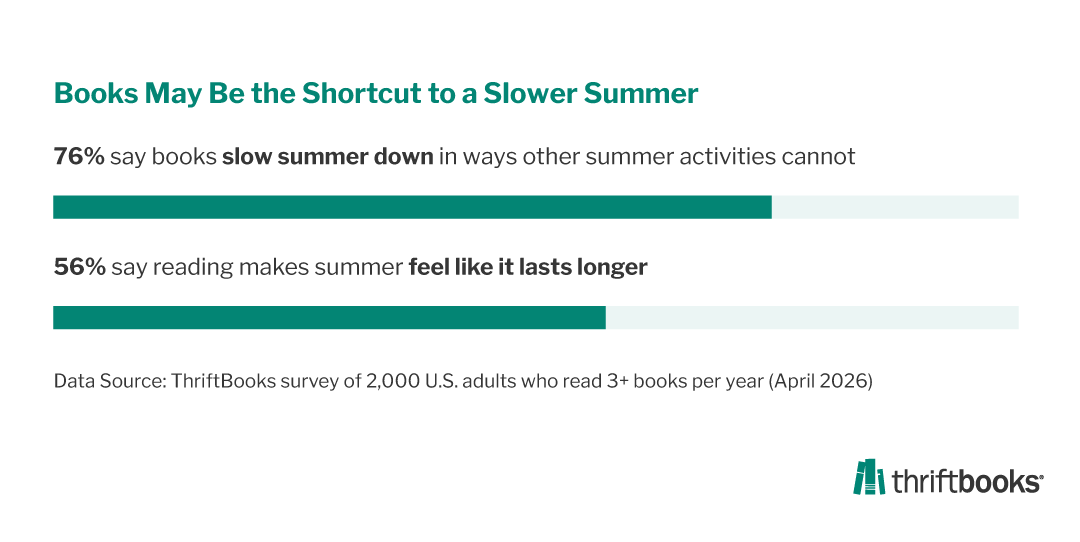
Summer used to feel different
Part of what shifted it was the screen. About 60% of readers say screens take away from the feeling of summer. The associations most tied to childhood summers—being outdoors, family time and reading—have quietly faded into the background. What replaced them is a season that feels more scheduled, more managed and harder to slow down.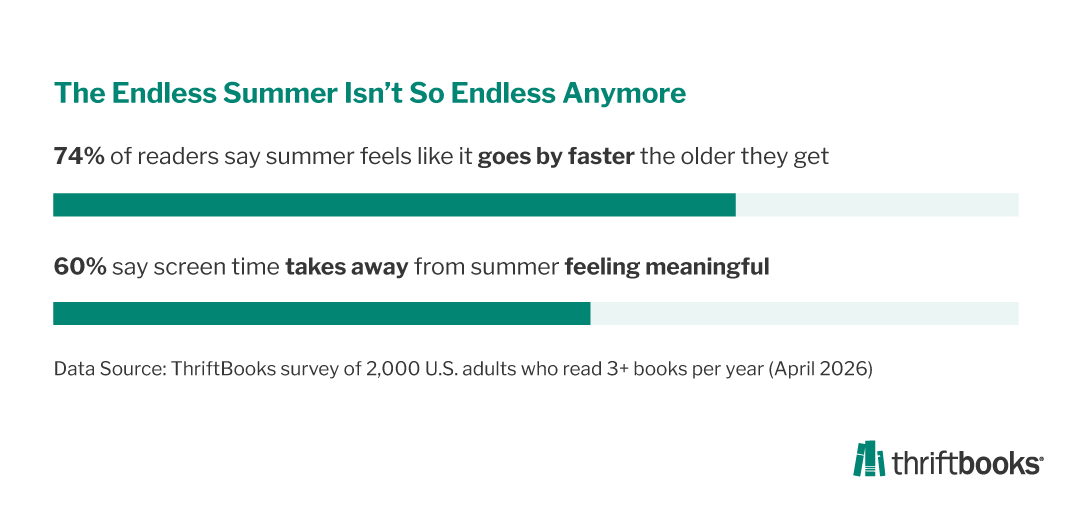
Reading slows it down. Guilt gets in the way.
Reading holds a complicated place in that picture. Fifty-three percent of readers fell in love with reading during childhood, and the emotional connection between books and summer runs deep. Fifty-six percent say reading makes summer feel like it lasts longer, and most agree it helps them slow down in a way other forms of downtime simply do not.
But wanting to read and feeling permitted to read are different things. Seventy-four percent of readers say they sometimes or often feel that reading for pleasure is only allowed after everything else is done. That hesitation often looks familiar: a book left on the nightstand while the dishes get done, a chapter saved for when the to-do list clears. The single biggest obstacle is not a shortage of time but the sense that reading is not productive enough to justify: 27% say the main barrier is feeling like they should be doing something more useful instead.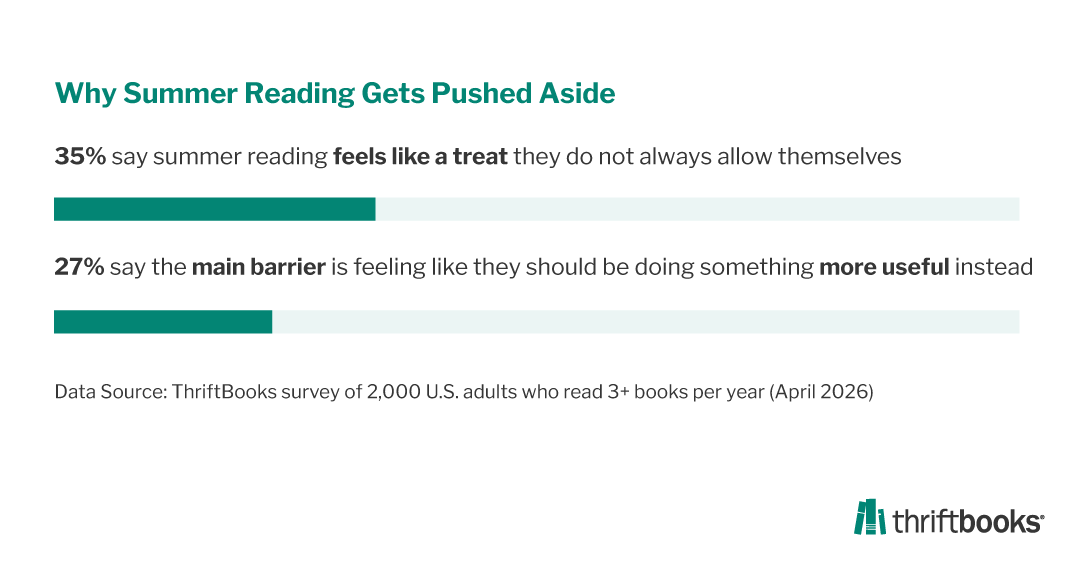
A generational divide
That tension runs deepest among younger readers. Gen Z enters summer more optimistic about reading than older generations, but also more burdened by it. Seventy-seven percent of Gen Z say reading makes summer feel longer, compared with 44% of Baby Boomers. Yet it is younger readers who are most likely to feel they need to earn the time first.
Why it matters now
The findings suggest summer often feels shorter because schedules and distractions leave less room to slow down. For many readers, books may be one of the simplest ways to bring back the endless summer feeling.
Methodology
ThriftBooks commissioned Atomik Research to conduct an online survey of 2,000 adults throughout the United States who read three or more books per year. The margin of error is plus or minus 2 percentage points with a confidence level of 95%.
Fieldwork took place between April 13 and April 17, 2026. Atomik Research, part of 4media group, is a creative market research agency.
This story was produced by ThriftBooks and reviewed and distributed by Stacker.
Leave a Comment
ThriftBooks ® and the ThriftBooks ® logo are registered trademarks of Thrift Books Global, LLC
