


Chase Hughes

Author Bio
Reading people, reading the room
Chase Hughes writes toward a practical question: what can you reliably notice in human behavior, and what can you do with it? Across his nonfiction, the emphasis falls on observation, pattern, and the small choices that change an interaction’s direction. The titles carry a promise: tools you can pick up, test, and refine. Alongside that work sits fiction that keeps one foot in the same territory, tension, intent, and the private calculations people make when stakes rise.
Systems for attention
The nonfiction reads like a workshop more than a lecture, less interested in grand theories than in repeatable moves: how to scan, how to sort signal from noise, how to keep your assumptions from doing the driving. That draws a reader who likes frameworks, lists, and field-ready language, and who doesn’t mind being asked to practice rather than simply agree. There’s also an ethical pressure here: any book about influence invites the reader to ask what they plan to do with the information. “Engineering” and “profiling” treat social life as measurable, but never simple.
Popular Chase Hughes books
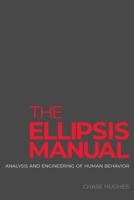
- The Ellipsis Manual: Analysis and Engineering of Human Behavior
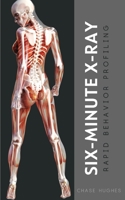
- Six-Minute X-Ray: Rapid Behavior Profiling
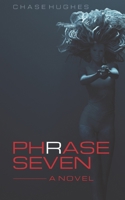
- Phrase Seven
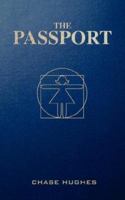
- The Passport
- Belgrade Archer
What the titles signal
The Ellipsis Manual signals the core of the project: turning messy, everyday behavior into something you can analyze without flattening it. “Ellipsis” hints at what’s left unsaid, the pauses and omissions people skip past, and readers who want a deep toolkit often start here. Six-Minute X-Ray is a stopwatch of a title, suggesting speed, triage, and a working read of a person without pretending it’s the whole truth. Phrase Seven feels like a code word, language used with intent, one concept worked hard. In fiction, a passport is never just a document; The Passport leans into movement and control, who gets through, who gets stopped, what a person will risk when a border becomes a plot device. Belgrade Archer pairs a place-name and a role, suggesting distance, aim, and patience, with the feel of espionage where a single decision echoes for chapters.
What the reading experience feels like
In the nonfiction, the pleasure is procedural. You’re not simply absorbing ideas; you’re collecting handles. The language of “manual,” “profiling,” and “engineering” rewards underlining and revisiting, inviting you to test a concept, then come back and adjust. It assumes you’re accountable for your own attention: how quickly you jump to conclusions, how much of “reading people” is really “reading yourself.” In the fiction, the same concerns show up as atmosphere, treating competence seriously, where preparation matters and observation is a form of survival.
Where to start
For the broadest sense of the project, start with The Ellipsis Manual. For something tighter and time-bound, Six-Minute X-Ray promises a faster entry. And if you want story, the same preoccupation with intent and consequence in narrative form, The Passport and Belgrade Archer offer a different door in. If you’re looking to buy books by Chase Hughes, you can find great low-cost copies on ThriftBooks.
ThriftBooks ® and the ThriftBooks ® logo are registered trademarks of Thrift Books Global, LLC
