


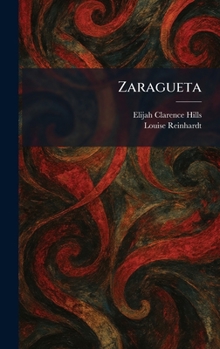
Zaragueta

"Zaragueta" is a celebrated two-act Spanish comedy written by the prolific dramatists Miguel Ramos Carri 3n and Vital Aza. Set in a provincial Spanish town, the play revolves around the character of Carlos, a young man who finds himself entangled in a web of financial lies and humorous misunderstandings. When his wealthy uncle, Don Indalecio, arrives for a visit, the situation escalates into a series of comedic confrontations and clever deceptions as Carlos attempts to hide his debts and academic failures.
Known for its witty dialogue and accessible language, this work has long been a staple of Spanish literature and language education. It offers a charming glimpse into late 19th-century Spanish social customs while delivering a timeless story about family expectations and the consequences of youthful indiscretion. This edition, edited by Elijah Clarence Hills and Louise Reinhardt, highlights the play's enduring humor and light-hearted theatrical structure. Whether read for its literary merit or as a tool for linguistic study, "Zaragueta" remains a quintessential example of the Spanish comedic tradition, providing readers with an engaging and spirited look at domestic life and provincial society.
This work has been selected by scholars as being culturally important, and is part of the knowledge base of civilization as we know it. This work was reproduced from the original artifact, and remains as true to the original work as possible. Therefore, you may see the original copyright references, library stamps (as most of these works have been housed in our most important libraries around the world), and other notations in the work.
This work is in the public domain in the United States of America, and possibly other nations. Within the United States, you may freely copy and distribute this work, as no entity (individual or corporate) has a copyright on the body of the work.
As a reproduction of a historical artifact, this work may contain missing or blurred pages, poor pictures, errant marks, etc. Scholars believe, and we concur, that this work is important enough to be preserved, reproduced, and made generally available to the public. We appreciate your support of the preservation process, and thank you for being an important part of keeping this knowledge alive and relevant.
Customer Reviews
ThriftBooks ® and the ThriftBooks ® logo are registered trademarks of Thrift Books Global, LLC
