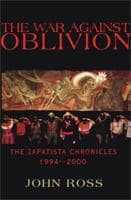
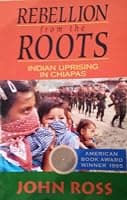
On New Year's Day 1994 a small group of Mayan peasants, led by a charismatic former University Professor, grabbed the attention of the world by taking over San Cristobel, the capitol of Chiapas, Mexico and proclaiming "Basta " to the prevailing orthodoxy of neo-liberal capitalism that was destroying the infrastructure of the peasant economy. Their cry was heard across the world and in the next decade the Zapatisas became a beacon of hope and a model to hundreds of thousands of activists across the world fighting globalization. John Ross was there from the beginning, following the Zapatistas on their journey, to the extent that he has been nicknamed "the Willy Loman of the Zapastistas." His first book, Rebellion from the Roots was praised by Alma Guillermoprieto in the New York Review of the Books. This book chronicles the last six years of the rebellion -- a phase where the Zapatistas have been below the media radar in many respects, and a period where Ross argues that the Zapatistas have been "Changing the World Without Taking Power." Part John Reed, part magic realist poet, Ross reveals the extraordinary events in Chiapas and explores the unique political experiment the Zapastistas have pioneered. This description may be from another edition of this product.
A careful, biting tribute to the leading Native rights movement
By Thriftbooks.com User, April 5, 2009
Ross follows the Zapatista movement blow by strangely poetic blow, through five years of growing local autonomy up to Mexico's stolen 2006 election. He records the words and acts of Zapatista leaders without presuming to explain their minds. The book covers a period when the Zapatistas turned from launching nationwide appeals for Indian rights, to giving up on the system and just building their own institutions, like the Solidarity movement in Poland did. Through it all, Ross oscillates between spitting outrage and whimsical appreciation for these brave, comical, savagely abused people. As an increasingly loopy Subcomandante Marcos quips on the ever-mobile Radio Insurgente, "We have heard that somewhere there is a better world. We didn't get that from Carlos Marx or even Groucho Marx. These are not the words of El Che or the Zapatista Army of National Liberation. The author of this subversive phrase is none other than B.B. King!"
0
★★★★★
Other reviewer didn't mention "Zapatistas"
By Thriftbooks.com User, March 10, 2007
Sometimes I review books I'm not familiar with, including those that I believe make a positive contribution to a worthwhile cause, or those that I feel are serving militarists and/or corporatists. John Ross' "Zapatistas" certainly falls in the former category. I have read his book "The Annexation of Mexico" and that gave me a much deeper understanding of Mexican history, and interventions by the US and other nations. I also heard Ross speak at a bookstore regarding his earlier book on the Zapatistas, "The War Against Oblivion." I found him to be well-informed, and a very pleasant person. Not "filled with bile" and so forth as another reviewer suggests. It seems some become filled with bile when the aggression of the Israeli government is criticized. The violence does go both ways between Isrealis and Palestinians, just as it went both ways between Apartheid rulers and black South Africans. Ross' sympathies lie squarely with the Palestinians who are currently experiencing an Apartheid-style oppression. Ross is also clearly (and understandably) sympathetic toward the Zapatistas and other grassroots movements against the economic warfare and cultural colonization of neoliberal economics and state militarism. He has my support and appreciation for his many important works, including his most recent writings, the subject of which (suffering people of southern Mexico) deserves a much more considerate review than a one-star dismissal.