


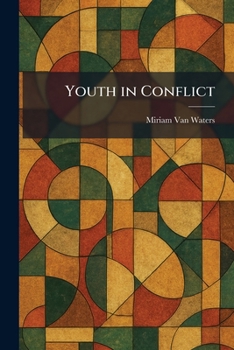
Youth in Conflict

Select Format
Select Condition 
Book Overview
"Youth in Conflict" is a seminal study exploring the root causes and societal responses to juvenile delinquency during the early 20th century. Written by the pioneering social worker and reformer Miriam Van Waters, Ph.D., this work examines the complex interplay between family life, school environments, and the legal system in shaping the behavior of troubled youth.
Van Waters delves into the psychological and social factors that lead young people into conflict with authority, advocating for a compassionate and scientific approach to rehabilitation rather than punitive measures. Through detailed analysis, the text highlights the importance of the juvenile court system as a diagnostic and curative agency. This foundational text provides invaluable insights into the history of social work and child welfare, reflecting a shift toward understanding the child as a product of their environment. "Youth in Conflict" remains a significant historical document for those interested in criminology, sociology, and the evolution of the American justice system's treatment of minors.
This work has been selected by scholars as being culturally important, and is part of the knowledge base of civilization as we know it. This work was reproduced from the original artifact, and remains as true to the original work as possible. Therefore, you may see the original copyright references, library stamps (as most of these works have been housed in our most important libraries around the world), and other notations in the work.
This work is in the public domain in the United States of America, and possibly other nations. Within the United States, you may freely copy and distribute this work, as no entity (individual or corporate) has a copyright on the body of the work.
As a reproduction of a historical artifact, this work may contain missing or blurred pages, poor pictures, errant marks, etc. Scholars believe, and we concur, that this work is important enough to be preserved, reproduced, and made generally available to the public. We appreciate your support of the preservation process, and thank you for being an important part of keeping this knowledge alive and relevant.
Customer Reviews
ThriftBooks ® and the ThriftBooks ® logo are registered trademarks of Thrift Books Global, LLC
