


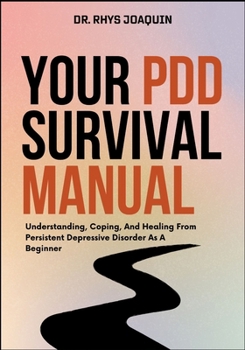
Your Pdd Survival Manual: Understanding, Coping, And Healing From Persistent Depressive Disorder As A Beginner
No Customer Reviews

Persistent Depressive Disorder (PDD), once known as dysthymia or chronic depression, is one of the most misunderstood yet widespread forms of depression. Unlike major depressive disorder (MDD), which often comes in episodes of severe symptoms that may last weeks or months, PDD is defined by its chronic, long-term nature. Individuals living with this condition experience a depressed mood for most of the day, more days than not, for at least two years (one year in children and adolescents). It is not always dramatic or disabling in its presentation, but it lingers quietly, casting a shadow over everyday life.
What makes PDD particularly challenging is its subtle persistence. Many people who suffer from it often describe feeling as if they have always been "this way." Instead of identifying their symptoms as part of a treatable condition, they may come to believe that constant sadness, hopelessness, fatigue, and low self-esteem are simply part of their personality or life circumstances. This mistaken belief delays diagnosis and treatment, allowing symptoms to stretch on for years-sometimes decades-without relief. The Human Experience of PDD:
Living with PDD often feels like walking through life in grayscale. The person may continue with daily responsibilities-going to work, caring for family, engaging in social activities-yet underneath, they feel emotionally drained, unmotivated, or numb. Because the symptoms are less acute than in major depression, people often learn to mask their struggles, making the disorder invisible to those around them. This invisibility can lead to isolation, frustration, and the painful sense that others do not understand what they are going through.
Many people with PDD describe their lives as lacking vitality or meaning. They may not experience full-blown despair every day, but they often feel as though they are "going through the motions" without truly living. This quiet suffering, endured over years, highlights why PDD deserves as much attention and compassion as other mental health conditions.
Why Awareness Matters:
Persistent Depressive Disorder is far more common than most realize. According to research, millions of people worldwide live with it, though many never receive a formal diagnosis. Early recognition and treatment can make a significant difference, yet stigma, misconceptions, and lack of awareness prevent many from seeking help. Understanding PDD is the first step toward breaking the cycle of silent suffering and encouraging people to believe that life can feel brighter again.
Treatment options, including psychotherapy, lifestyle changes, and medication, are available and can greatly improve symptoms. While recovery is often gradual, with proper support and management, individuals can learn to navigate their condition, reduce the intensity of symptoms, and reclaim a sense of hope and vitality.
In this book, we will explore Persistent Depressive Disorder in depth-from understanding its causes and symptoms to learning coping strategies and treatment approaches. The goal is not only to educate but also to provide compassion, encouragement, and practical tools for anyone living with PDD or supporting a loved one who does.
What makes PDD particularly challenging is its subtle persistence. Many people who suffer from it often describe feeling as if they have always been "this way." Instead of identifying their symptoms as part of a treatable condition, they may come to believe that constant sadness, hopelessness, fatigue, and low self-esteem are simply part of their personality or life circumstances. This mistaken belief delays diagnosis and treatment, allowing symptoms to stretch on for years-sometimes decades-without relief. The Human Experience of PDD:
Living with PDD often feels like walking through life in grayscale. The person may continue with daily responsibilities-going to work, caring for family, engaging in social activities-yet underneath, they feel emotionally drained, unmotivated, or numb. Because the symptoms are less acute than in major depression, people often learn to mask their struggles, making the disorder invisible to those around them. This invisibility can lead to isolation, frustration, and the painful sense that others do not understand what they are going through.
Many people with PDD describe their lives as lacking vitality or meaning. They may not experience full-blown despair every day, but they often feel as though they are "going through the motions" without truly living. This quiet suffering, endured over years, highlights why PDD deserves as much attention and compassion as other mental health conditions.
Why Awareness Matters:
Persistent Depressive Disorder is far more common than most realize. According to research, millions of people worldwide live with it, though many never receive a formal diagnosis. Early recognition and treatment can make a significant difference, yet stigma, misconceptions, and lack of awareness prevent many from seeking help. Understanding PDD is the first step toward breaking the cycle of silent suffering and encouraging people to believe that life can feel brighter again.
Treatment options, including psychotherapy, lifestyle changes, and medication, are available and can greatly improve symptoms. While recovery is often gradual, with proper support and management, individuals can learn to navigate their condition, reduce the intensity of symptoms, and reclaim a sense of hope and vitality.
In this book, we will explore Persistent Depressive Disorder in depth-from understanding its causes and symptoms to learning coping strategies and treatment approaches. The goal is not only to educate but also to provide compassion, encouragement, and practical tools for anyone living with PDD or supporting a loved one who does.
Format:Paperback
Language:English
ISBN:B0FNMXQ74S
ISBN13:9798262089383
Release Date:August 2025
Publisher:Independently Published
Length:154 Pages
Weight:0.61 lbs.
Dimensions:0.3" x 7.0" x 10.0"
Related Subjects
PsychologyCustomer Reviews
0 rating
Copyright © 2026 Thriftbooks.com
Terms of Use | Privacy Policy | Do Not Sell/Share My Personal Information | Cookie Policy | Cookie Preferences | Accessibility Statement
ThriftBooks ® and the ThriftBooks ® logo are registered trademarks of Thrift Books Global, LLC
ThriftBooks ® and the ThriftBooks ® logo are registered trademarks of Thrift Books Global, LLC
