


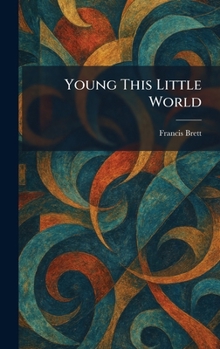
Young This Little World

"Young This Little World" is a poignant exploration of social transformation within a traditional English village during the early twentieth century. Set against the backdrop of the rolling Worcestershire countryside, the narrative captures the delicate balance between the deep-seated customs of the rural gentry and the inevitable arrival of modern progress. As the village of Chaddesbourne faces the pressures of economic shifts and cultural change, the inhabitants must navigate the evolving landscape of class, loyalty, and legacy.
The work masterfully crafts a vivid portrait of a community at a crossroads. The story highlights the friction between the established order of the landed estate and the rising influences that threaten to disrupt a long-held way of life. With lyrical prose and keen psychological insight, "Young This Little World" examines the human cost of progress and the enduring spirit of the English countryside. This work stands as a significant contribution to the regional novel genre, offering a nostalgic yet clear-eyed look at a vanishing era. Readers will be drawn to its rich atmosphere, well-drawn characters, and the timeless struggle between the past and the future.
This work has been selected by scholars as being culturally important, and is part of the knowledge base of civilization as we know it. This work was reproduced from the original artifact, and remains as true to the original work as possible. Therefore, you may see the original copyright references, library stamps (as most of these works have been housed in our most important libraries around the world), and other notations in the work.
This work is in the public domain in the United States of America, and possibly other nations. Within the United States, you may freely copy and distribute this work, as no entity (individual or corporate) has a copyright on the body of the work.
As a reproduction of a historical artifact, this work may contain missing or blurred pages, poor pictures, errant marks, etc. Scholars believe, and we concur, that this work is important enough to be preserved, reproduced, and made generally available to the public. We appreciate your support of the preservation process, and thank you for being an important part of keeping this knowledge alive and relevant.
Customer Reviews
ThriftBooks ® and the ThriftBooks ® logo are registered trademarks of Thrift Books Global, LLC
