


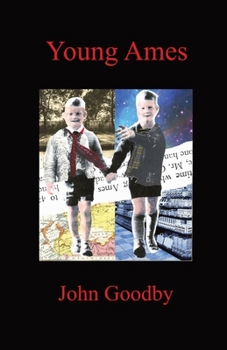
Young Ames

Young Ames is a 12-section mock epic in experimental verse. It charts the friendship of two boys, born in 1958, attending Kingsland Road Infant and Junior School in the Kingstanding suburb of Birmingham, separated by the 11-plus exam, and then reunited for a few years in their late teens. The poem is framed by their meeting several decades later thanks to the worldwide web. The chief figure, or hero, of the mock-epic is Ames, whose life since he and his friend Goby lost contact has involved touring with the band UB40, working in an Israeli beach bar, making a small fortune wiring and plumbing Malayan skyscrapers in the 1980s, partying hard in Goa, losing money in the Asian stock market crash of the 1990s, and setting up a Sydney and Brighton-based import-export business. Ames is a real name, but also a pun on 'aims', since the poem is about 'young aims' - youthful ambitions - and, more distantly, ' mes' (the French for 'soul'). The (very loose) narrative model is Virgil's Aeneid, and the verbal texture of the poem is determined by my chance discovery of Young Ames, an obscure US novel of 1942 by Walter D. Edmonds, set in 1830s New York, which charts the rags-to-riches story of its eponymous narrator. Weaving together fragments of this novel - an archetypal tale of capitalist success - with actual memory fragments, the poem both celebrates the rich experience it describes and raises questions about the nature of working-class 'success' and how it is framed and judged. Fictional and real Ames intermingle and, maybe, reflect on each other, and on the narrator. And since the contemporary Ames currently runs a beach resort in Bali, another set of literary echoes involves Joseph Conrad, including his 'The Secret Sharer' and Lord Jim - the latter because the friends were taken to see the film based on that novel when it was released in 1966.
Customer Reviews
ThriftBooks ® and the ThriftBooks ® logo are registered trademarks of Thrift Books Global, LLC
