


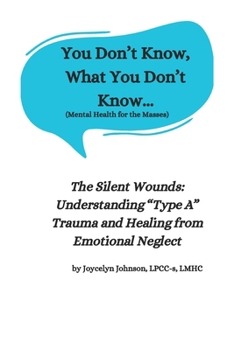
You Don't Know What You Don't Know...: The Silent Wounds: Understanding "Type A" Trauma and Healing from Emotional Neglect
No Customer Reviews

Table of Contents Introduction Part 1: Understanding "Type A" TraumaChapter 1: What is "Type A" Trauma?Chapter 2: The Impact of Unmet NeedsChapter 3: How "Type A" Trauma Manifests in Adulthood
Part 2: Grieving the Losses of "Type A" TraumaChapter 4: Naming the LossesChapter 5: Breaking the SilenceChapter 6: Allowing Yourself to Grieve
Part 3: Addressing the WoundsChapter 7: Reparenting YourselfChapter 8: Rebuilding Emotional RegulationChapter 9: Building Healthy Relationships
Part 4: Moving Toward WholenessChapter 10: Developing Emotional IntelligenceChapter 11: Finding Meaning and PurposeChapter 12: Letting Go and Moving Forward
Conclusion: The Power of Healing Additional Resources Other Titles by the Author Introduction The Silent Wounds of "Type A" Trauma
Trauma is often associated with what happened to someone: the painful, disruptive events that leave scars-this is "Type B" trauma. But what about the wounds caused by what didn't happen? "Type A" trauma, or absence trauma, is the result of emotional neglect-the absence of love, validation, safety, or connection that a child fundamentally needs to thrive. Unlike physical or emotional abuse, "Type A" trauma does not leave visible marks, making it harder to identify, acknowledge, or address. Emotional neglect is frequently overlooked or misunderstood because it is invisible. It happens quietly, in homes that may otherwise appear functional, to parents who may have been physically present but emotionally unavailable. There are no dramatic stories or clear events to point to-just a vague sense that something was missing, something essential. This absence is often dismissed by the individual, their family, or society at large, leaving many to question whether their feelings are valid. The impact of unmet emotional needs in childhood can be profound, lingering far into adulthood. It shapes self-worth, the ability to form and maintain healthy relationships, and the capacity to manage emotions. Chronic feelings of emptiness, self-doubt, perfectionism, and struggles with vulnerability are often rooted in this invisible trauma. The consequences manifest not in dramatic ways but in subtle patterns of behavior that keep individuals disconnected from their true selves and others. This book was written to shed light on the silent wounds of "Type A" trauma-to give voice to those who have struggled in silence, unsure of what they're even missing. It aims to help readers understand the nature of emotional neglect, recognize its impact, and take actionable steps toward healing. By exploring the grief, the wounds, and the journey to wholeness, this book offers a roadmap for reclaiming the love, validation, and sense of safety that every person deserves. If you have ever felt unseen, unheard, or unworthy without understanding why, this book is for you. If you have struggled to form meaningful relationships or have carried an unexplainable emptiness, this book is for you. It is time to name the losses, grieve the unmet needs, and begin the process of reparenting yourself. Healing is not about perfection but about progress, and this book will guide you toward a life where your emotional needs are acknowledged, honored, and met. The journey begins with understanding-understanding what was missing, why it mattered, and how you can heal. Through knowledge, compassion, and actionable tools, you will begin to uncover the invisible scars of "Type A" trauma and take your first steps toward reclaiming wholeness.
Part 2: Grieving the Losses of "Type A" TraumaChapter 4: Naming the LossesChapter 5: Breaking the SilenceChapter 6: Allowing Yourself to Grieve
Part 3: Addressing the WoundsChapter 7: Reparenting YourselfChapter 8: Rebuilding Emotional RegulationChapter 9: Building Healthy Relationships
Part 4: Moving Toward WholenessChapter 10: Developing Emotional IntelligenceChapter 11: Finding Meaning and PurposeChapter 12: Letting Go and Moving Forward
Conclusion: The Power of Healing Additional Resources Other Titles by the Author Introduction The Silent Wounds of "Type A" Trauma
Trauma is often associated with what happened to someone: the painful, disruptive events that leave scars-this is "Type B" trauma. But what about the wounds caused by what didn't happen? "Type A" trauma, or absence trauma, is the result of emotional neglect-the absence of love, validation, safety, or connection that a child fundamentally needs to thrive. Unlike physical or emotional abuse, "Type A" trauma does not leave visible marks, making it harder to identify, acknowledge, or address. Emotional neglect is frequently overlooked or misunderstood because it is invisible. It happens quietly, in homes that may otherwise appear functional, to parents who may have been physically present but emotionally unavailable. There are no dramatic stories or clear events to point to-just a vague sense that something was missing, something essential. This absence is often dismissed by the individual, their family, or society at large, leaving many to question whether their feelings are valid. The impact of unmet emotional needs in childhood can be profound, lingering far into adulthood. It shapes self-worth, the ability to form and maintain healthy relationships, and the capacity to manage emotions. Chronic feelings of emptiness, self-doubt, perfectionism, and struggles with vulnerability are often rooted in this invisible trauma. The consequences manifest not in dramatic ways but in subtle patterns of behavior that keep individuals disconnected from their true selves and others. This book was written to shed light on the silent wounds of "Type A" trauma-to give voice to those who have struggled in silence, unsure of what they're even missing. It aims to help readers understand the nature of emotional neglect, recognize its impact, and take actionable steps toward healing. By exploring the grief, the wounds, and the journey to wholeness, this book offers a roadmap for reclaiming the love, validation, and sense of safety that every person deserves. If you have ever felt unseen, unheard, or unworthy without understanding why, this book is for you. If you have struggled to form meaningful relationships or have carried an unexplainable emptiness, this book is for you. It is time to name the losses, grieve the unmet needs, and begin the process of reparenting yourself. Healing is not about perfection but about progress, and this book will guide you toward a life where your emotional needs are acknowledged, honored, and met. The journey begins with understanding-understanding what was missing, why it mattered, and how you can heal. Through knowledge, compassion, and actionable tools, you will begin to uncover the invisible scars of "Type A" trauma and take your first steps toward reclaiming wholeness.
Format:Paperback
Language:English
ISBN:B0DR36114Q
ISBN13:9798304274258
Release Date:December 2024
Publisher:Independently Published
Length:78 Pages
Weight:0.26 lbs.
Dimensions:0.2" x 6.0" x 9.0"
Related Subjects
PsychologyCustomer Reviews
0 rating
Copyright © 2025 Thriftbooks.com
Terms of Use | Privacy Policy | Do Not Sell/Share My Personal Information | Cookie Policy | Cookie Preferences | Accessibility Statement
ThriftBooks ® and the ThriftBooks ® logo are registered trademarks of Thrift Books Global, LLC
ThriftBooks ® and the ThriftBooks ® logo are registered trademarks of Thrift Books Global, LLC
