


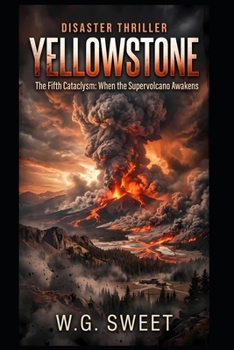
Yellowstone
No Customer Reviews

The transport finally lurched to a halt, the engine dying with a ragged gasp. Bateman stepped out, his boots crunching on a thin layer of frost. The silence was profound, broken only by the mournful sigh of the wind whistling through the rocky crags. Before him, half-hidden by overgrown scrub and a dusting of snow, stood the outpost. It wasn't grand, not a gleaming beacon of scientific progress, but a utilitarian, concrete structure, scarred by time and weather. Its windows were dark, vacant eyes, and a thick layer of dust coated its reinforced doors. This was it. His sanctuary. His prison. With a sigh that misted in the frigid air, Bateman began the arduous task of assessing the outpost. The reinforced doors, thankfully, were unlocked, though they groaned in protest as he forced them open. The interior was cold, musty, and eerily preserved, like a tomb waiting for its occupant. Decades of disuse had left their mark: dust lay thick on every surface, cobwebs draped like morbid decorations, and the air was heavy with the scent of stale, stagnant air. Yet, beneath the grime, Bateman could see the glint of metal, the promise of forgotten technology. He moved through the sparsely furnished living quarters, his footsteps echoing in the silence. A common room with worn furniture, a small, functional kitchen, and individual sleeping cubicles. It was basic, but it was functional. The real prize lay deeper within. Following a dimly lit corridor, Bateman discovered the heart of the outpost: the laboratories. These were the rooms that held his attention, the spaces that offered the glimmer of hope he so desperately needed. Banks of consoles, though dormant, were still in place. Refrigeration units, surprisingly intact, hummed faintly when he managed to coax them back to life using the transport's auxiliary power. A well-stocked, though desiccated, chemical storage area offered a treasure trove of reagents and compounds. And then there was the biomedical section, a pristine-looking containment suite, complete with an examination table and a dizzying array of diagnostic equipment. It was more than he could have hoped for. This place, built for studying the extremes of nature, would now become the crucible for his fight against the ultimate perversion of nature. The isolation was absolute. No garbled radio transmissions reached this far into the mountains, no distant rumble of engines broke the oppressive quiet. He was utterly alone, cut off from the remnants of humanity, a solitary figure waging war against a global pandemic. It was a dangerous gamble. Any accident, any unforeseen complication, and there would be no one to help. He was a doctor with a mission, a scientist with a guilt-ridden conscience, and now, a hermit in a forgotten corner of the world. The weight of his responsibility settled upon him, a heavy cloak woven from the threads of despair and determination. He spent the first few days simply cataloging, cleaning, and bringing the essential systems online. The transport's power source was a temporary solution, so Bateman's immediate priority was to restore the outpost's primary generator. The manual, a thick, dusty tome, became his bible. The process was arduous, involving much cursing, a few minor electrical shocks, and an almost comical amount of wrestling with corroded pipes and sparking wires. But eventually, with a triumphant roar that seemed to shake the very foundations of the mountains, the generator sputtered to life, bathing the outpost in a steady, reliable glow. Now, he could truly begin.
Format:Paperback
Language:English
ISBN:B0H3VH5GMR
ISBN13:9798199786829
Release Date:June 2026
Publisher:Independently Published
Length:354 Pages
Weight:0.94 lbs.
Dimensions:0.9" x 6.0" x 9.0"
Customer Reviews
0 rating
Copyright © 2026 Thriftbooks.com
Terms of Use | Privacy Policy | Do Not Sell/Share My Personal Information | Cookie Policy | Cookie Preferences | Accessibility Statement
ThriftBooks ® and the ThriftBooks ® logo are registered trademarks of Thrift Books Global, LLC
ThriftBooks ® and the ThriftBooks ® logo are registered trademarks of Thrift Books Global, LLC
