





Book Overview
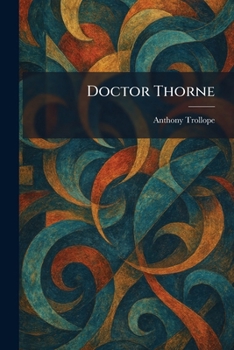
"Doctor Thorne" is the celebrated third novel in Anthony Trollope's "Chronicles of Barsetshire" series, offering a masterful exploration of the intersections of social class, wealth, and love in mid-Victorian England. The story centers on Mary Thorne, the illegitimate niece of the kind-hearted country physician Dr. Thomas Thorne. Mary finds herself in a difficult position when she falls in love with Frank Gresham, the heir to the Greshamsbury estate. While their affection is mutual, the Gresham family faces financial ruin and insists that Frank must marry into money to save his ancestral home.
As the pressure mounts, Dr. Thorne is burdened by a significant secret concerning a massive inheritance that could solve everyone's problems, yet his professional ethics and personal integrity force him to navigate a treacherous path. Anthony Trollope's keen observation of character and his sharp critique of a society obsessed with pedigree and fortune make this one of his most enduring and popular works. Filled with humor, legal intrigue, and deeply felt emotion, "Doctor Thorne" is a quintessential Victorian drama that examines whether love can truly triumph over the rigid expectations of the landed gentry.
This work has been selected by scholars as being culturally important, and is part of the knowledge base of civilization as we know it. This work was reproduced from the original artifact, and remains as true to the original work as possible. Therefore, you may see the original copyright references, library stamps (as most of these works have been housed in our most important libraries around the world), and other notations in the work.
This work is in the public domain in the United States of America, and possibly other nations. Within the United States, you may freely copy and distribute this work, as no entity (individual or corporate) has a copyright on the body of the work.
As a reproduction of a historical artifact, this work may contain missing or blurred pages, poor pictures, errant marks, etc. Scholars believe, and we concur, that this work is important enough to be preserved, reproduced, and made generally available to the public. We appreciate your support of the preservation process, and thank you for being an important part of keeping this knowledge alive and relevant.
Customer Reviews
Love above riches, though the riches follow, too
Taking an idiom literally
Don't give up on this one
Matrimonial dilemma--For love or for money?
ThriftBooks ® and the ThriftBooks ® logo are registered trademarks of Thrift Books Global, LLC
