
Skip to content
Scan a barcode
Scan
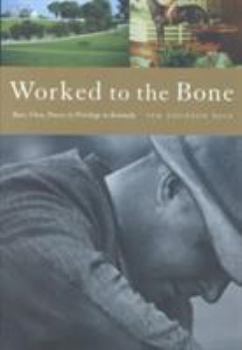
Paperback Worked to the Bone: A History of Race, Class, Power, and Privilege in Kentucky Book

ISBN: 1583670475

ISBN13: 9781583670477

Worked to the Bone: A History of Race, Class, Power, and Privilege in Kentucky

Select Format

Select Condition ThriftBooks Help Icon

Recommended

Format: Paperback

Condition: Very Good

$6.09
Save $12.86!
List Price $18.95
Only 6 Left

Book Overview

Worked to the Bone is a provocative examination of race and class in the United States and the mechanics of inequality. In an elegant and accessible style that combines thoroughly documented sociological insight with her own compelling personal narrative, Pem Buck illustrates the ways in which constructions of race and the promise of white privilege have been used at specific historical moments to divide those in the United Statesspecifically, in two Kentucky countieswho might have otherwise acted on common class interests. From the initial creation of the concept of "whiteness" and early strategies focused on convincing Europeans, regardless of their class position, to identify with the eliteto believe that what was good for the elite was good for themto the moment between 1750 and 1800 when most people who were identified by their European descent finally came to believe that skin color was as integral to their identity as gender, the promise of white privilege underpinned the Kentucky system.
Pem Buck examines the long term effects of these developments and discusses their impact on the lives of working people in Kentucky. She also analyzes the role of local tobacco-growing and corporate elites in the underdevelopment of the state, highlighting the ways in which relationships between poor white and poor black working people were continuously manipulated to facilitate that process.
Documentary material includes speeches, songs, photographs, charts, cartoons, and ads presented in a large, visually appealing format.

Customer Reviews

2 ratings

Worked to the Bone

History is written by the "winners," the people possessing the money, the power, the control, and the victory over the subservient, weaker, poorer, "losing" groups. These "histories" tell the story of what it was like for the powerful "winners", often failing to describe the experience of the poor. History, however, has been re-written with the arrival of Pem Buck's Worked to the Bone: Race, Class, Power, & Privilege in Kentucky. Worked to the Bone tells the history of America, specifically Kentucky, from a distinctively different point of view in which members of the white, affluent, founding elite are not the heros. Rather, they are the white privileged class that manipulated constructions of race, gender, and other social structures so as to enhance and maintain their ideas of white/social privilege. Pem Buck vocalizes her beliefs in the work's opening chapter that "the future is shaped by our view of the past" and "history is a story constructed to explain the present." Her aim is to present the history of the people that have been, in her words, "worked to the bone." The elite has worked the "bony-fingered people" since their arrival hundreds of years ago. Her view depicts the "view from under the sink," the view held by the people at the bottom of the social, racial, and economic ladders. Buck's work is successful in that it traces the evolution of societal constructions in Kentucky. However, Worked to the Bone is lacking in its ethnographic edge, failing to involve sufficient personal accounts, as well as its validity. Ethnographic research, such as that presented in Buck's work, has its difficulties. With ethnographic research and writing one needs to respect the privacy of those with whom they work. Anonymity is a big issue, and if individuals request to remain anonymous, the researcher must comply. Such requests are those with which Buck must deal. This has an impact on her work that is impossible to ignore: places, names, and dates are changed so as to maintain anonymity. Buck's first endnote addresses this issue: "...most requested anonymity; thus all names of local people are pseudonyms...I have given pseudonyms to counties and towns and correspondingly changed names of newspapers and of local histories when they reveal county or town identity..." She also notes that certain locations have been "misplaced" and that census numbers have been altered so as to maintain confidentiality. Although Buck claims that these alterations in no way alter her argument, the reader cannot help but find him/herself wondering about how much is "true" or not. Is it even possible to use this book as a valid source for one's own academic writing? This is a question that both the reader and writer must address, especially when it comes to citing Buck's research, research that may not be completely true due to respect of privacy issues. Such are the troubles of ethnography, and the reader may also encounter what s/he may find disappointin

Real History for Real People

In Worked to the Bone: Race, Class, Power, & Privilege in Kentucky, Pem Davidson Buck offers an intimate view of social history "from under the sink," as she puts it. Her concern is with the lives of men and women whose labors typically go unnoticed and uncelebrated in popular history. Indeed, insofar as popular history books and history textbooks tend to assume the naturalness of elite privilege (such is the essence of the "great man" theory of history), Buck's study is very pointedly offered as an antidote to the orthodoxy. Her focus is on the power struggles between the wealthy and the exploited in Kentucky, and on how modern racial and class identities have been forged in the fire of that struggle. By extension, her work offers a keen analysis of the cultural formations that shape the identities of all Americans.Elites weren't born to rule, and there certainly isn't any divine ordinance guaranteeing their continued dominance. Thus, as Buck's account of Kentucky history reveals, they could never afford to take their power for granted. Their strategy historically has been to divide and conquer. From the colonial period to the post-cold war period elites have pitted non-elites against each other--men against women, Europeans against Africans, northern Europeans against southern Europeans, the Irish against the English, "real Americans" against naturalized immigrants, middle class against lower class--in order to maintain their iron grip on power. They also have had to police the arbitrary borders of human identity that they helped to create. Buck's study especially excels at showing how the ideological construction of the "white race" has helped to promote elite privilege over the last three centuries.Worked to the Bone is a fine book that seeks not only to instruct, but also to affect a real change in attitudes about class politics in the United States. Buck is clearly on a mission here, and her readily accessible prose style means that people both in and out of the academy will be able to read her, and clearly understand her message. She compels us to examine what the lives of typical working class people in Kentucky and elsewhere might be like if the elites were dethroned, and if our country's resources were distributed in a more humane and truly democratic fashion.
Copyright © 2025 Thriftbooks.com Terms of Use | Privacy Policy | Do Not Sell/Share My Personal Information | Cookie Policy | Cookie Preferences | Accessibility Statement
ThriftBooks ® and the ThriftBooks ® logo are registered trademarks of Thrift Books Global, LLC

GoDaddy Verified and Secured