


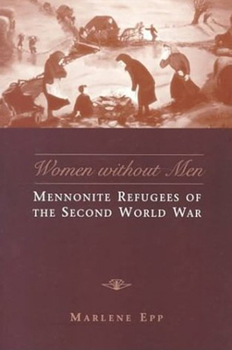
Women Without Men: Mennonite Refugees of the Second World War


Select Format
Select Condition 
Book Overview
Marlene Epp, who has written extensively on Mennonite history, presents here the story of thousands of Soviet Mennonite women who, having lost their husbands and fathers to Stalinist work camps and the Second World War, made an arduous journey through war-torn Europe. Housed in displaced persons camps after the war, many eventually emigrated to Paraguay and Canada. More than a mere description of the events that led these women from their native homes, this work encompasses the culture of women refugees and, in particular, how they 'remembered' the events that marked their lives. The women wove their memories into larger histories that helped them to deal with the horror of the past and contributed to a sense of normalcy in their new and strikingly different homes. Epp examines the particular difficulties of the emigration experience for women without men. These women often used ingenious strategies to protect themselves and their families, yet they were consistently depicted as weak and helpless by Mennonite refugee boards eager to reimpose traditional gender roles disrupted by the Soviet and war environments. Epp's study focuses on the intersection of gender, war, and immigration. In her analysis of the relationship of female-headed households with patriarchal, postwar society, she gains access to the personal worlds of these women. In doing so, she offers a better understanding of the culture of postwar immigrants and postwar families, the workings of refugee settlement agencies, and the functioning of postwar ethnic communities in Canada, Germany, and Paraguay.
Format:Paperback
Language:English
ISBN:0802082688
ISBN13:9780802082688
Release Date:March 2000
Publisher:University of Toronto Press
Length:296 Pages
Weight:1.00 lbs.
Dimensions:0.9" x 5.9" x 8.9"
Grade Range:Postsecondary and higher
Customer Reviews
1 rating
a minor chapter of the WW2 experiences
Published by Thriftbooks.com User , 20 years ago
The Mennonites were a group of ethnic Germans, who had been living in the Soviet Union for decades, prior to World War 2. Distinguished by their religious beliefs, as a minor Christian church. Epp explains their experiences during and after the war. Focusing on the women. Some welcomed the German army as liberators, and indeed, some could only be described as willing collaborators with the Nazis. The Mennonite experiences here are an often overlooked part of the war. With the ambiguities of collaboration, and then having to flee a resurgent Soviet army. The later part of the book goes into the resettlement of the refugees, mostly in Canada. Often with the problems of the women being separated from spouses, or perhaps being widowed, or simply not knowing if a husband was still alive.
Copyright © 2026 Thriftbooks.com
Terms of Use | Privacy Policy | Do Not Sell/Share My Personal Information | Cookie Notice | Cookie Preferences | Accessibility Statement
ThriftBooks ® and the ThriftBooks ® logo are registered trademarks of Thrift Books Global, LLC
ThriftBooks ® and the ThriftBooks ® logo are registered trademarks of Thrift Books Global, LLC
