


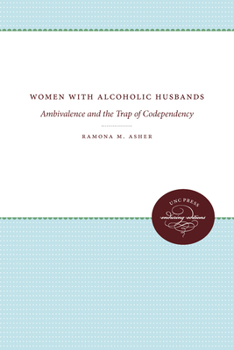
Women with Alcoholic Husbands: Ambivalence and the Trap of Codependency

In this important study of women with alcoholic husbands, Asher vividly describes the process of coming to terms with a profound crisis in one's private life. From interviews with more than fifty women, all of whom were participants in family treatment programs, she assembles a composite picture of the experiences shared by wives of alcoholics. The testimony given by these women illustrates the steps they must take to regain control of their lives. The first step is figuring out what is happening and deciding what to do about it. Asher argues that the vogue of using the label "codependent" may actually hinder rather than facilitate emotional health. Led to think of themselves as addicted to their husbands' addictions the wives of alcoholics may be persuaded that their own problems can't be overcome. But, Asher shows, these women can take command of their lives.
Originally published in 1992.
A UNC Press Enduring Edition -- UNC Press Enduring Editions use the latest in digital technology to make available again books from our distinguished backlist that were previously out of print. These editions are published unaltered from the original, and are presented in affordable paperback formats, bringing readers both historical and cultural value.
Originally published in 1992.
A UNC Press Enduring Edition -- UNC Press Enduring Editions use the latest in digital technology to make available again books from our distinguished backlist that were previously out of print. These editions are published unaltered from the original, and are presented in affordable paperback formats, bringing readers both historical and cultural value.
Format:Paperback
Language:English
ISBN:0807843733
ISBN13:9780807843734
Release Date:April 1992
Publisher:University of North Carolina Press
Length:240 Pages
Weight:0.80 lbs.
Dimensions:0.8" x 5.9" x 8.9"
Customer Reviews
1 rating
Needs updating, but daring and empowering.
Published by Thriftbooks.com User , 16 years ago
In comforting academic language, rather than the palsy conversation common to self help books, the author relates her discoveries after interviewing 50 women with alcoholic husbands. It's a small sample, but telling. The book came out in 1992, and the world is still not ready for what Asher suggests: Women do not necessarily seek out alcoholic relationships, but adapt to what they experience, and the label co dependent is victim-blaming. It is unfair to label as perverse (codependent) behaviors women have been trained since childhood to perfect. There's more to it than that, but the upshot, on following the arc of alcoholic relationships, is that the codependent label shifts responsibility off the shoulders of the substance abuser as surely as the "enabler" does when she calls in sick for him. She adapts to a situation, a problem he gives her, in the way she has been trained. Only when/if she realizes her problems are separate can she heal. And, as explained by Asher, that is vastly different from codependency, the NEED to have a problem. The women she interviewed are all bright and self-aware, but with different families of origin, education levels, and responsibilities. Only their ties to alcoholic men unite them. This tacitly adds to the evidence that society trains women, all women, to pacify and fix and that it is not necessary a "codependent" behavior. Should be updated and reissued for the 21st Century.
Copyright © 2026 Thriftbooks.com
Terms of Use | Privacy Policy | Do Not Sell/Share My Personal Information | Cookie Policy | Cookie Preferences | Accessibility Statement
ThriftBooks ® and the ThriftBooks ® logo are registered trademarks of Thrift Books Global, LLC
ThriftBooks ® and the ThriftBooks ® logo are registered trademarks of Thrift Books Global, LLC
