


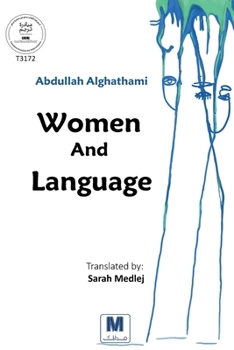
Women And Language

Women and Language by Abdullah Alghathami is an in-depth cultural and linguistic study that investigates the historical exclusion of women from authorship, intellectual authority, and symbolic power within language. Rather than treating women's writing as a purely aesthetic category, the book examines the structural foundations of language itself, arguing that linguistic systems-especially in their grammatical, rhetorical, and philosophical formations-have been historically masculinized. Alghathami traces how masculinity came to be treated as the generic or default form in grammar, pronouns, and discourse, while femininity was marked, secondary, and often confined to metaphor, emotion, or the body. He explores how written discourse, historically controlled by men, became the foundation of cultural memory, philosophy, and history, thereby reinforcing male authority and relegating women to oral expression, storytelling, and symbolic representation.
Drawing on examples from classical Arabic linguistics, Western philosophy, feminist theory, and modern cultural production, the book critiques the ideological assumptions embedded in language, including the association of rationality and intellect with masculinity and the reduction of women to sensual or decorative functions in art, media, and literature. A central section of the work analyzes the figure of Scheherazade in One Thousand and One Nights as a model of feminine narrative resistance, demonstrating how storytelling becomes a tool of survival, transformation, and symbolic power. Alghathami also examines the phenomenon of women writers adopting masculine narrative styles to gain legitimacy, questioning whether true linguistic equality requires the feminization of discourse or a redefinition of human expression itself. Ultimately, the book presents language as a battleground where gender, authority, identity, and cultural memory intersect, and argues that reclaiming linguistic agency is essential to redefining women's place in history and thought.
Customer Reviews
ThriftBooks ® and the ThriftBooks ® logo are registered trademarks of Thrift Books Global, LLC
