


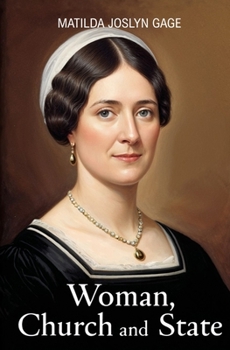
Woman, Church and State

A pioneering work of feminist critique, this book examines the relationship between organized religion, political power, and the subordination of women. Written in the late nineteenth century amid growing movements for women's rights, it challenges the authority of Christian institutions and argues that religious doctrine has historically justified the denial of women's civil, economic, and spiritual freedoms.
Drawing on historical examples-including interpretations of ancient matriarchal societies and the persecution of women during the witch trials-the author presents a sweeping analysis of how belief systems have shaped gender inequality. The work engages deeply with themes of power, autonomy, and the intersection of church and state, positioning itself within early feminist thought that would later influence broader social movements.
Provocative and meticulously argued, it remains a significant contribution to debates on religion, history, and women's struggle for equality.
Customer Reviews
ThriftBooks ® and the ThriftBooks ® logo are registered trademarks of Thrift Books Global, LLC
