


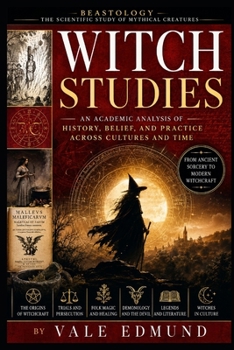
Witch Studies

What is a witch-and why has the figure inspired fear, fascination, persecution, and fascination across thousands of years?
Witch Studies is an expansive investigation into the history, folklore, religion, psychology, and cultural evolution of one of humanity's most enduring supernatural figures. Moving far beyond the familiar image of broomsticks, cauldrons, and pointed hats, this book examines how societies have constructed the idea of the witch and why accusations of hidden supernatural power have appeared in so many different cultures.
Beginning in the ancient world, Witch Studies traces traditions of curses, harmful magic, divination, necromancy, magical tablets, amulets, sorcery, and forbidden ritual through Mesopotamia, Egypt, Greece, and Rome. It follows these ideas into medieval Christianity, where older fears of magical harm became increasingly connected to Satan, demonic pacts, heresy, familiars, and the terrifying concept of an organized conspiracy of witches operating against Christian society.
The book then enters the world of European folklore, where witchcraft was often far more personal. Witches were blamed for sick livestock, failed crops, infertility, spoiled milk, storms, mysterious illness, bad luck, and sudden death. Ordinary arguments between neighbors could acquire supernatural meaning, transforming resentment, jealousy, poverty, and social tension into accusations of curses and magical revenge.
From there, Witch Studies investigates the great European witch persecutions of the fifteenth through eighteenth centuries, examining the legal systems, interrogation methods, torture, confessions, denunciations, mass trials, executions, and religious fears that allowed accusations to spread. Major outbreaks in Germany, Scotland, Switzerland, France, Scandinavia, and elsewhere reveal why witch hunting became extraordinarily destructive in some regions while remaining limited in others.
A detailed examination of the Salem witch trials places the famous events of 1692 within the wider history of colonial American witch belief, exploring Puritan theology, the afflicted girls, spectral evidence, confessions, executions, community divisions, and the eventual collapse of the prosecutions.
But who were the people actually accused of witchcraft? Witch Studies looks beyond the stereotype to examine gender, age, widowhood, poverty, inheritance disputes, healing traditions, social reputation, religious difference, and neighborhood conflict. It also considers the evidence for actual folk-magical practitioners while addressing the popular but historically problematic theory that the European witch trials represented the destruction of a surviving underground pagan religion.
The investigation then expands beyond Europe, comparing beliefs in harmful supernatural practitioners across Africa, Asia, the Middle East, Oceania, and the Americas. Rather than assuming that every culture possesses the same concept of the witch, the book examines how different societies understand sorcery, inherited supernatural power, spirit manipulation, possession, curses, magical attack, and the supernatural causes of illness and misfortune. It also explores how colonialism and missionary activity transformed indigenous traditions by translating unfamiliar religious concepts into European categories of witchcraft and demonology.
The final chapters follow the witch into literature and modern popular culture-from Shakespeare's Weird Sisters and fairy-tale hags to the Wicked Witch, occult horror, teenage witches, fantasy spellcasters, games, television, and the modern witch as an empowered outsider. An accusation that once carried the possibility of execution has become one of the most recognizable supernatural identities in the world.
Customer Reviews
ThriftBooks ® and the ThriftBooks ® logo are registered trademarks of Thrift Books Global, LLC
