


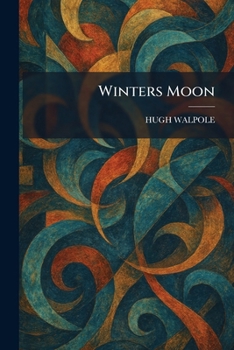
Winters Moon

Select Format
Select Condition 
Book Overview
"Winters Moon" is a sweeping social drama set in the aftermath of the First World War, exploring the rigid structures of the British aristocracy as they clash with the burgeoning modernism of the 1920s. The novel follows the lives of two sisters, Janet and Rosalind Grandison, who navigate the complexities of love, duty, and social standing in a rapidly changing world.
Janet, seeking stability for her family, enters into a marriage of convenience with Lord Wildherne, an arrangement rooted in mutual respect and traditional expectations. In contrast, her sister Rosalind embodies the defiant, restless spirit of the new age, challenging the old-world values that Janet strives to uphold. Set against the backdrop of London's high society, the narrative delves into the psychological depths of its characters as they grapple with grief, loyalty, and the search for meaning in a disillusioned era.
With its rich atmosphere and keen observation of class dynamics, "Winters Moon" remains a poignant exploration of the tension between the enduring weight of the past and the uncertain promise of the future. Hugh Walpole masterfully captures a society at a crossroads, making this work a significant contribution to interwar British literature.
This work has been selected by scholars as being culturally important, and is part of the knowledge base of civilization as we know it. This work was reproduced from the original artifact, and remains as true to the original work as possible. Therefore, you may see the original copyright references, library stamps (as most of these works have been housed in our most important libraries around the world), and other notations in the work.
This work is in the public domain in the United States of America, and possibly other nations. Within the United States, you may freely copy and distribute this work, as no entity (individual or corporate) has a copyright on the body of the work.
As a reproduction of a historical artifact, this work may contain missing or blurred pages, poor pictures, errant marks, etc. Scholars believe, and we concur, that this work is important enough to be preserved, reproduced, and made generally available to the public. We appreciate your support of the preservation process, and thank you for being an important part of keeping this knowledge alive and relevant.
Customer Reviews
ThriftBooks ® and the ThriftBooks ® logo are registered trademarks of Thrift Books Global, LLC
